TOP CUSTOMER REVIEW
This model works flawless and with added features that other regular C1 brad nailers do not have.
– Jerome
Air Brad Nailer | Brad Nail Gun | Brad Gun
Original price was: $330.00.$297.00Current price is: $297.00.
all prices include GST
FREE FAST DELIVERY ACROSS AUSTRALIA ON ALL ORDERS $75+ or more - (save $27.50)
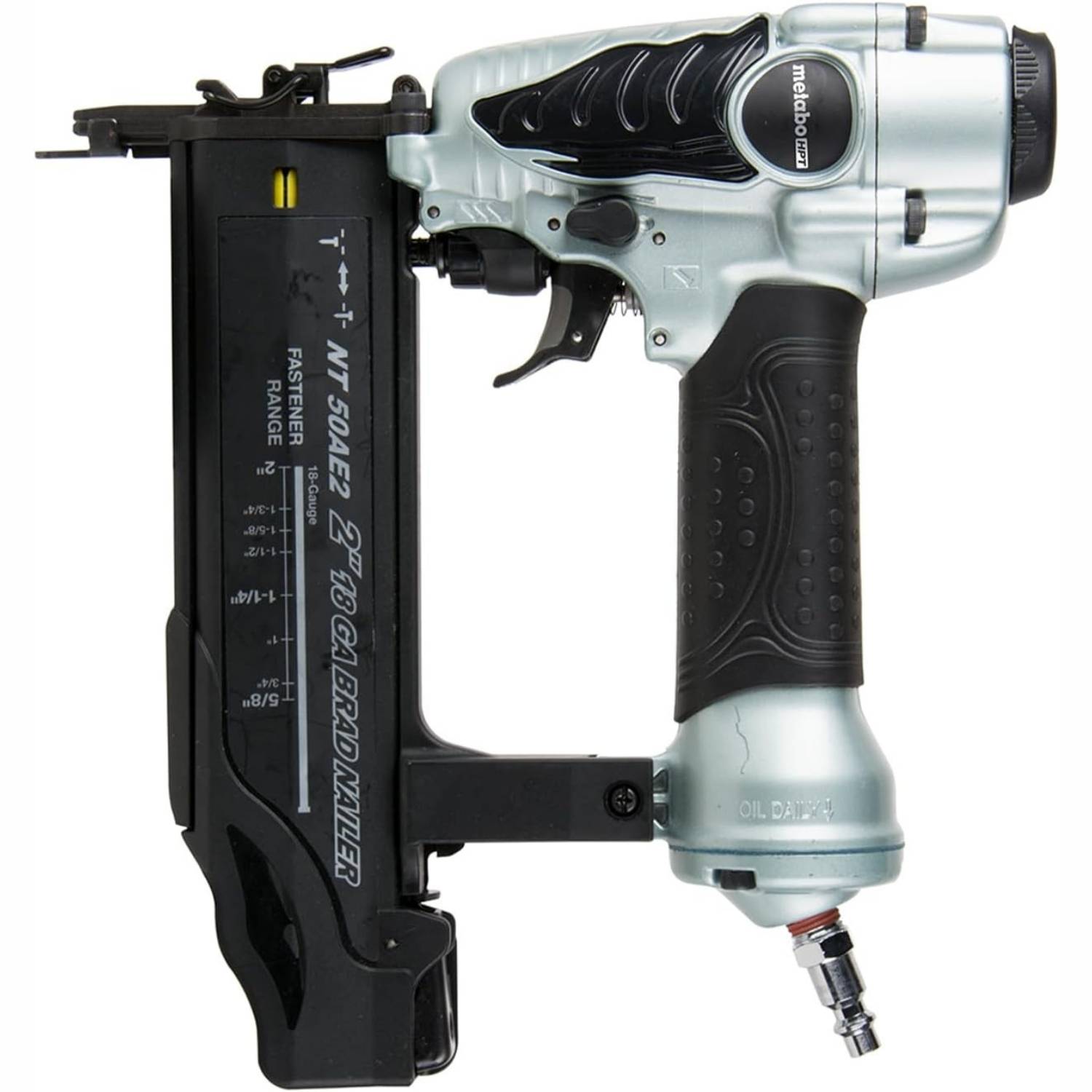
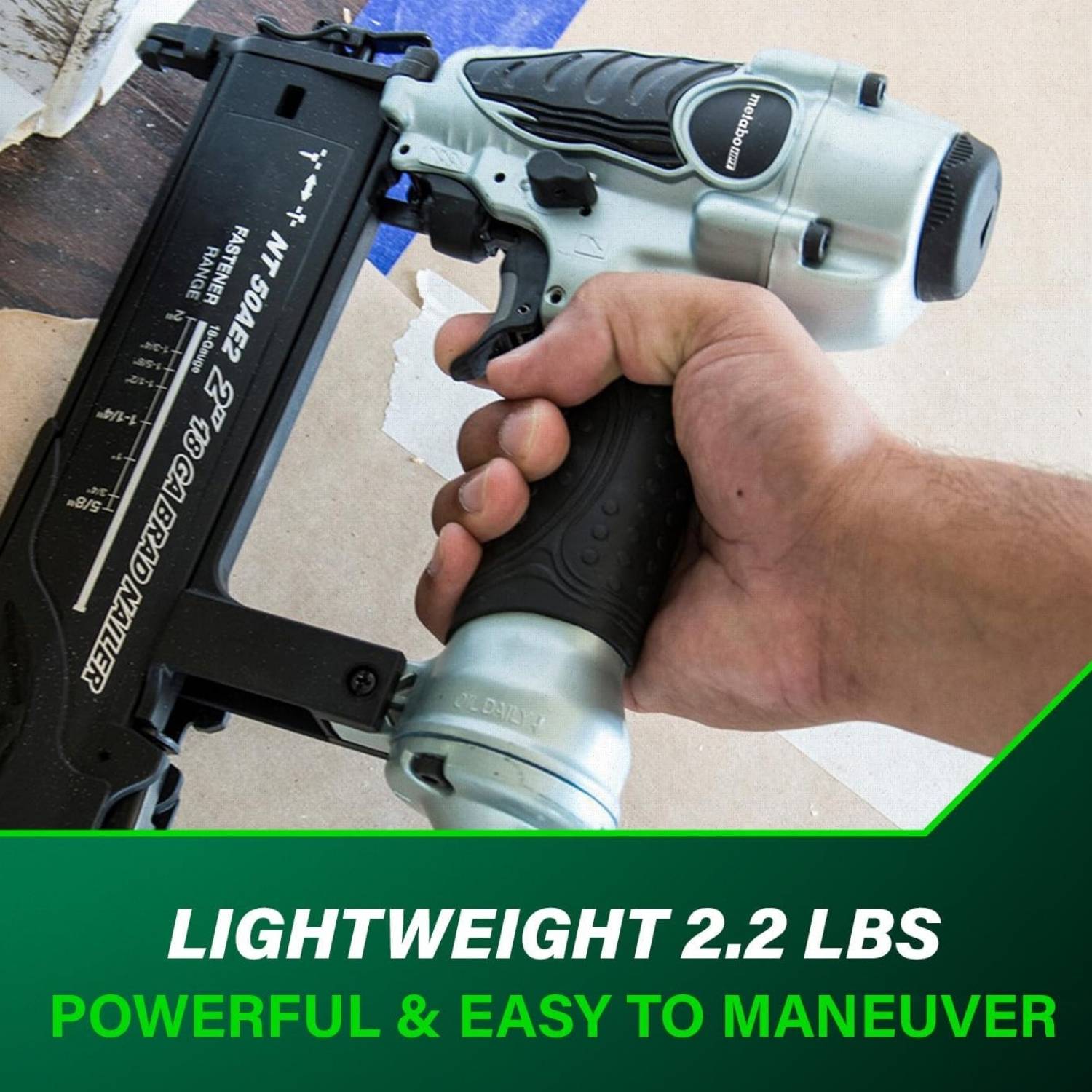
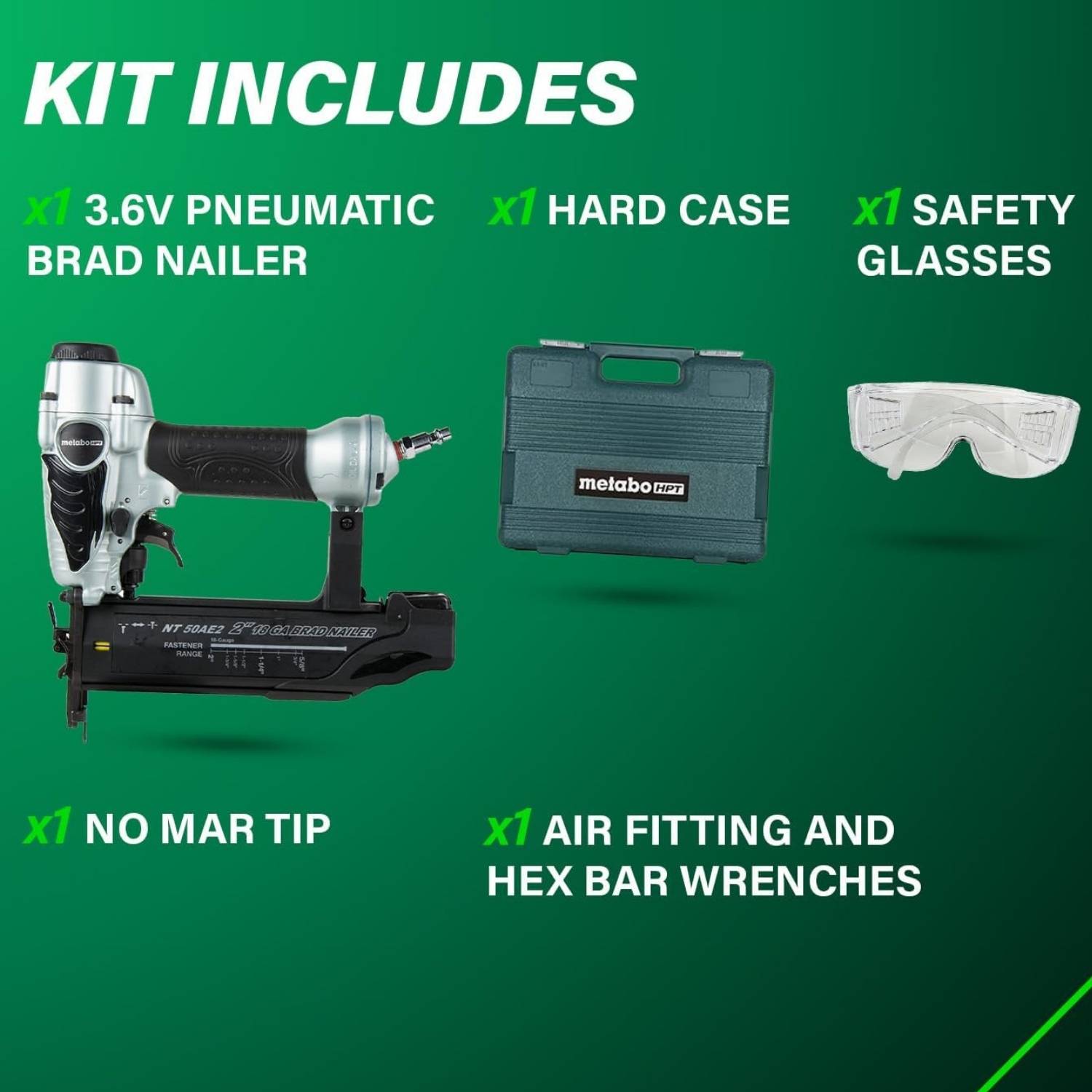
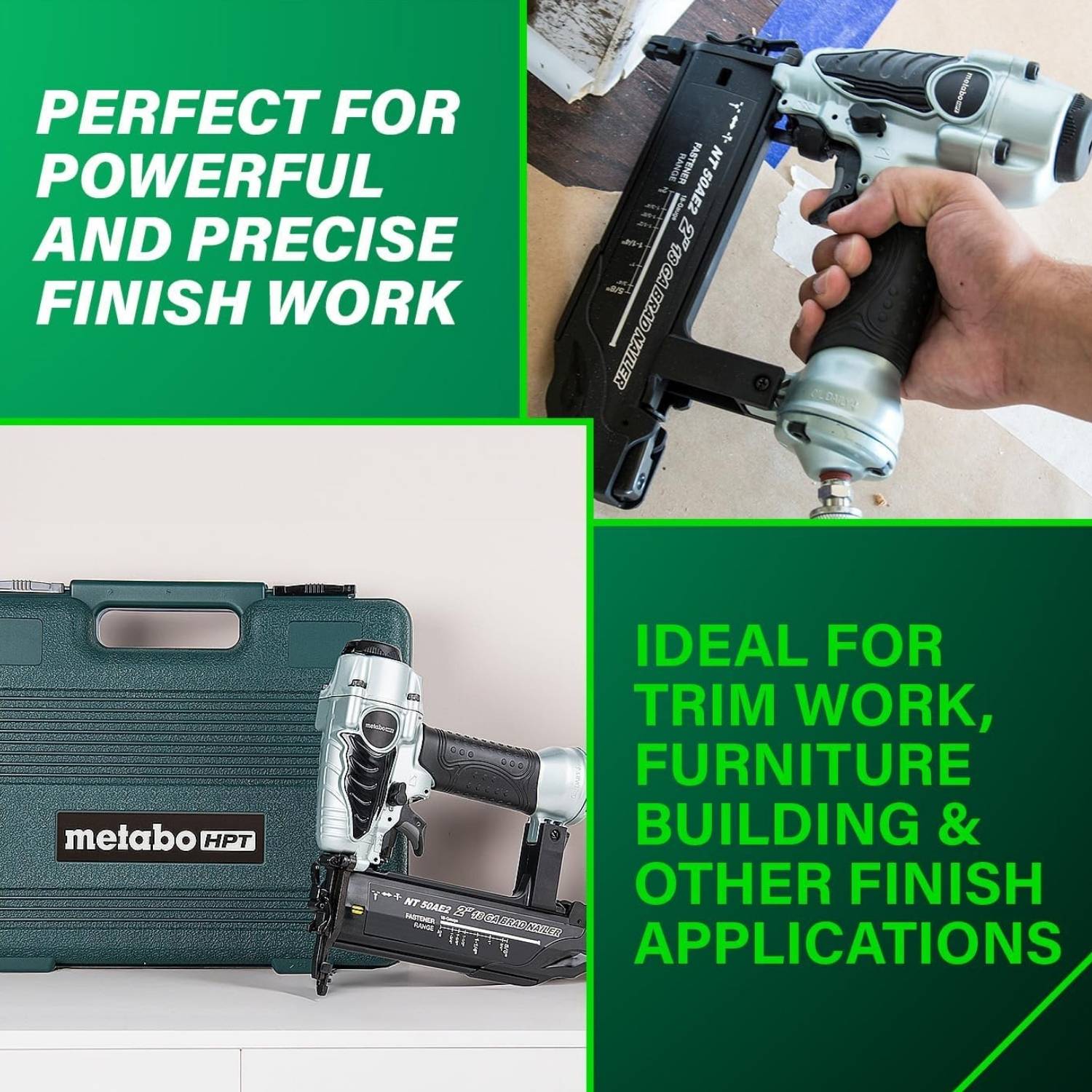
This lightweight 1 kg | 2.2lb brad nailer accepts 18-gauge nails from 5/8″ to 2″ and delivers professional results with ease. It features a selective trigger for bump or sequential firing, an adjustable depth dial for flush finishes, and a protective no-mar tip to prevent surface damage.
The 360-degree adjustable exhaust and magazine reload indicator make this tool ideal for all-day use on any project.
SPECIFICATIONS
- BRAD NAILER: Accepts 5/8″ up to 2″ 18-gauge brad nails
- FASTENERS: Accepts 5/8 In. to 2 In. 18-gauge fasteners
- LIGHTWEIGHT: Only 1kg | 2.2 lbs

DUE TO CURRENT DEMAND PLEASE ALLOW 5-7 DAYS DELIVERY
Direct To Your Door - All Across Australia
Original price was: $330.00.$297.00Current price is: $297.00.
Nail Compatibility
Trigger Mechanism
Lightweight Design
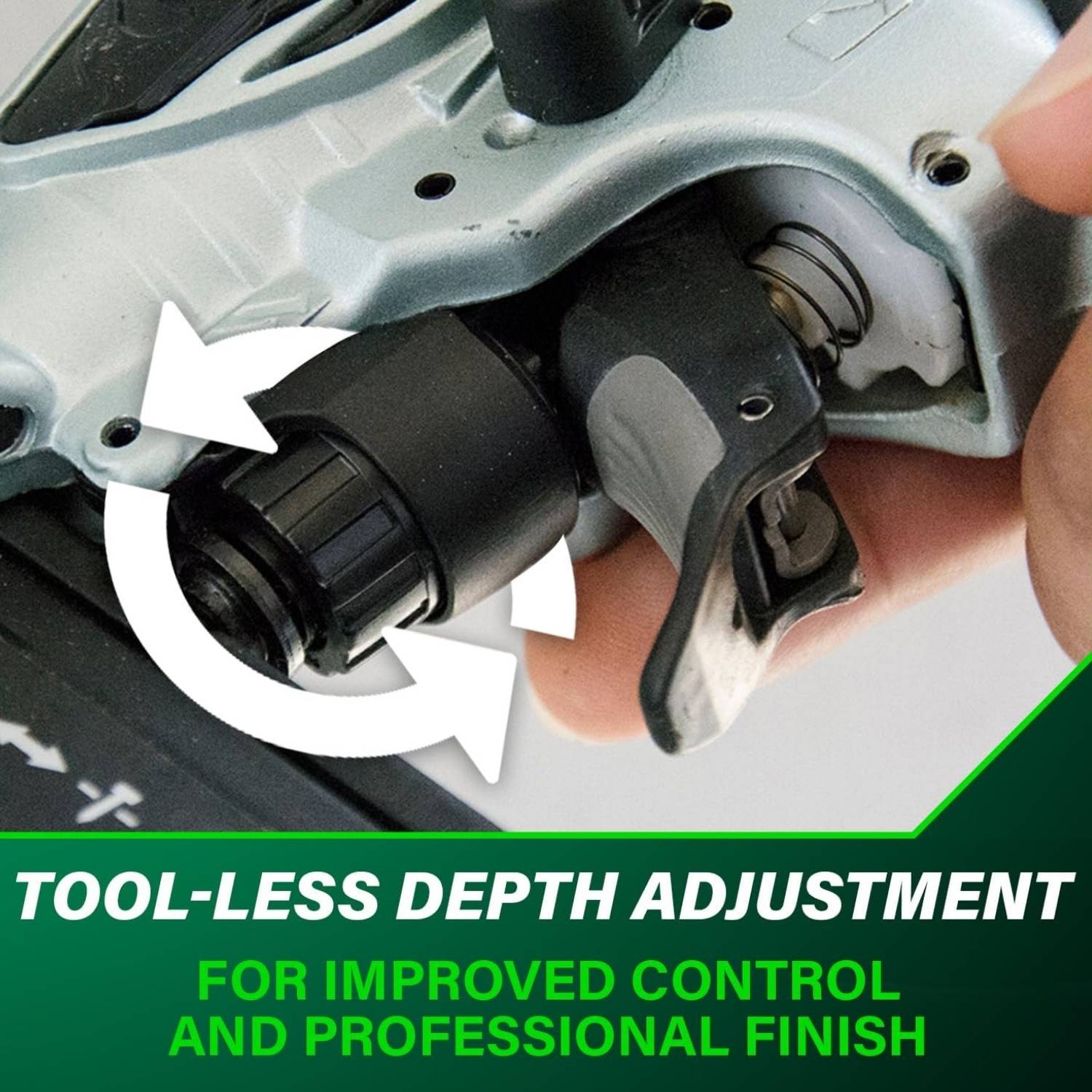
Depth Adjustment
No-Mar Tip
Reload Indicator
Adjustable Exhaust
-
WHICH PAYMENT METHODS ARE ACCEPTED?
We currently only accept credit card payments, PayPal & Crypto currency. More payment methods will be added in the future.
-
WHAT CURRENCY ARE THE PRICES DISPLAYED IN?
All of our prices are displayed in $AUD - Australian Dollars and include GST
-
I HAVEN'T RECEIVED MY ORDER YET! IS IT LOST?
If you have any concerns with your order, please contact our support team by email and they will be glad to assist you. Most emails are answered within 1 business day.
Support Team: [email protected]
-
HOW DO I KNOW IF MY ORDER HAS BEEN SHIPPED?
Once your order is shipped, it will be marked as complete in our database and you will receive a confirmation email with a tracking number.
-
DO YOU HAVE A SHOP LOCATION?
We are a “online supplier”, with no physical shop or premises. In this way, we are able to pass our considerable savings directly to you.
-
DO I GET A RECEIPT FOR MY ORDER?
You will be sent a receipt for your order by email after payment is made. You will also receive a confirmation email with a tracking number once your item has been shipped.
-
WHAT ARE YOUR DELIVERY OPTIONS AND HOW LONG WILL IT TAKE?
- AUSTRALIA: Free delivery, 5-7 days
- Other countries: Free delivery, 7-10 days
OUR DELIVERY PARTNERS

-
Why is an Air Brad Nailer preferred for crisp trim installation?
Why is an Air Brad Nailer preferred for crisp trim installation? It drives slender brads quietly and cleanly, keeping decorative edges intact and ensuring tight, even placement.
-
What makes a Brad Gun useful for DIY home projects?
What makes a Brad Gun useful for DIY home projects? It offers quick, clean fastening for tasks like panel finishing, decorative framing and craft builds, helping users achieve neat, professional results.
-
Is a Brad Gun effective for decorative timber panelling?
Is a Brad Gun effective for decorative timber panelling? Yes—it provides subtle, secure fastening that blends seamlessly, preserving the visual appeal of feature walls and interior finishes.
-
Is a Brad Nail Gun suitable for securing lightweight trims?
Is a Brad Nail Gun suitable for securing lightweight trims? Absolutely—its slender fasteners hold trims firmly without leaving noticeable marks, allowing quick installation and a refined finish.
-
Can a Brad Nail Gun handle repeated fastening throughout the day?
Can a Brad Nail Gun handle repeated fastening throughout the day? Yes—its efficient pneumatic or mechanical action supports continuous use, ideal for ongoing renovation or trim installation tasks.
-
Can an Air Brad Nailer reduce splitting in thinner timber?
Can an Air Brad Nailer reduce splitting in thinner timber? Yes—the fine-gauge brads penetrate cleanly and minimise surface stress, making it suitable for delicate profiles and softwoods.
-
Can a Brad Gun handle craft and hobby projects?
Can a Brad Gun handle craft and hobby projects? Absolutely—lightweight timber shapes, frames and decorative boards attach cleanly, supporting neat, fast assembly with fine fasteners.
-
What makes a Brad Gun effective for neat edge finishing?
What makes a Brad Gun effective for neat edge finishing? Its slender brads allow close-to-edge fastening without splitting, ensuring crisp lines and a polished appearance in final detail work.
-
Does an Air Brad Nailer help achieve a more professional finish?
Does an Air Brad Nailer help achieve a more professional finish? Yes—small entry points and flush seating give surfaces a refined look, often requiring only minimal filling.
-
How does a Brad Nail Gun improve accuracy in fine carpentry?
How does a Brad Nail Gun improve accuracy in fine carpentry? Its narrow nose and lightweight feel allow pinpoint placement, helping users secure mouldings, trims and decorative panels with impressive consistency.
-
Why is a Brad Nail Gun useful for attaching mouldings?
Why is a Brad Nail Gun useful for attaching mouldings? It inserts brads subtly, helping mouldings sit flush while preserving decorative lines and reducing finishing work.
-
What makes a Brad Gun safer for delicate timber pieces?
What makes a Brad Gun safer for delicate timber pieces? Its fine-gauge brads exert less force than heavier nails, supporting fragile trims, beading and lightweight joinery with minimal risk of cracking.
-
Can a Brad Gun help reduce clean-up during renovation?
Can a Brad Gun help reduce clean-up during renovation? Yes—minimal surface disruption means less filling, sanding and dust, making entire projects cleaner and faster.
-
Why use an Air Brad Nailer instead of heavier nailers for trims?
Why use an Air Brad Nailer instead of heavier nailers for trims? It avoids large entry holes and surface dents, protecting delicate decorative work while ensuring firm attachment.
-
Can a Brad Nail Gun help reduce the need for clamps?
Can a Brad Nail Gun help reduce the need for clamps? Yes—fast, secure brad placement holds pieces steady, allowing quicker assembly of small timber components.
-
Is a Brad Nail Gun appropriate for refurbishing older timberwork?
Is a Brad Nail Gun appropriate for refurbishing older timberwork? Yes—it fastens gently without stressing fragile edges, ensuring heritage trims and panels stay intact during updates.
-
What makes an Air Brad Nailer ideal for detailed timber finishing?
What makes an Air Brad Nailer ideal for detailed timber finishing? It delivers smooth, controlled fastening with minimal surface marking, making it perfect for trims, edging and cabinetry where precision and clean results matter.
-
How does a Brad Nail Gun support quick project turnaround?
How does a Brad Nail Gun support quick project turnaround? Fast firing, minimal filling and accurate placement make it ideal for jobs needing rapid progress and clean results.
-
Why choose a Brad Gun for indoor renovation work?
Why choose a Brad Gun for indoor renovation work? It produces low recoil and clean fastening, ideal for installing decorative trims, architraves and lightweight timber pieces without damaging surfaces.
-
Is a Brad Nail Gun practical for frame assembly work?
Is a Brad Nail Gun practical for frame assembly work? Yes—its controlled fastening keeps parts aligned, making it handy for picture frames, craft joinery and lightweight structural pieces.
-
Can an Air Brad Nailer help reduce user fatigue on long projects?
Can an Air Brad Nailer help reduce user fatigue on long projects? Yes—its efficient action and smooth trigger response help maintain rhythm without excessive strain.
-
How does an Air Brad Nailer support precision tasks in woodworking?
How does an Air Brad Nailer support precision tasks in woodworking? Its steady, low-impact drive allows tight corner work, fine detailing and consistent fastening across delicate materials.
-
Can an Air Brad Nailer work well on MDF and softwood?
Can an Air Brad Nailer work well on MDF and softwood? Yes—its thin brads enter smoothly without causing flaring or breakdown, supporting secure fastening across common interior materials.
-
Is a Brad Nail Gun reliable for skirting and architrave installation?
Is a Brad Nail Gun reliable for skirting and architrave installation? Definitely—fine brads keep the boards tight against the wall while keeping surface touch-ups to a minimum.
-
Why do professionals use an Air Brad Nailer for cabinetry?
Why do professionals use an Air Brad Nailer for cabinetry? It offers precise depth and clean entry, ensuring draws, frames and panels fit tightly without leaving visible marks.
-
Is a Brad Gun a good tool for beginner woodworkers?
Is a Brad Gun a good tool for beginner woodworkers? Absolutely—its ease of use and forgiving fastening style help new users achieve neat, professional-quality finishes from day one.
-
Why consider a Brad Gun for installing lightweight cladding?
Why consider a Brad Gun for installing lightweight cladding? It fixes panels securely while keeping fasteners discreet, maintaining the visual quality of interior decorative surfaces.
-
How does an Air Brad Nailer help maintain a clean work surface?
How does an Air Brad Nailer help maintain a clean work surface? The fine brads sink flush without large entry holes, keeping surfaces smooth and requiring minimal filling or sanding afterward.
-
Can a Brad Nail Gun help speed up indoor finishing work?
Can a Brad Nail Gun help speed up indoor finishing work? Absolutely—rapid firing and minimal surface preparation reduce job time significantly, making it a favourite among renovators.
-
What benefits does a Brad Gun offer over manual nailing?
What benefits does a Brad Gun offer over manual nailing? It reduces fatigue, increases consistency and eliminates hammer marks, providing a far more polished finish.
The Complete Guide to Professional Finish Carpentry
Have you ever spent hours carefully installing trim work, only to have hammer marks, split wood, or visible nail holes ruin the professional finish you were going for? Whether you’re a seasoned contractor or a dedicated DIY enthusiast, you know that the difference between amateur-looking and professional-quality finish work often comes down to one crucial tool: a reliable brad nailer. The Metabo HPT NT50AE2 has earned its reputation as a go-to choice for professionals and serious hobbyists alike, delivering consistent performance without the premium price tag.
Finish carpentry demands precision, speed, and reliability. You can’t afford a tool that jams at critical moments, leaves marks on expensive hardwood, or causes fatigue after just an hour of use. This is where the Metabo HPT NT50AE2 brad nailer distinguishes itself from countless competitors crowding the market. At just 2.2 pounds and packed with features typically found on tools costing twice as much, it represents the sweet spot between professional capability and practical affordability.
In this comprehensive guide, we’re diving deep into everything you need to know about the Metabo HPT NT50AE2. From understanding exactly what makes an 18-gauge brad nailer the right choice for finish work to mastering the specific features that set this tool apart, you’ll discover why experienced carpenters keep this nailer within arm’s reach on every job site. Let’s explore what makes this tool worth your investment.
Understanding the Metabo HPT NT50AE2: What You’re Actually Getting
Before we dive into specific features and applications, let’s establish exactly what the Metabo HPT NT50AE2 brings to your tool collection and why it matters for the work you do.
The 18-Gauge Brad Nailer Explained
The NT50AE2 is an 18-gauge pneumatic brad nailer, and understanding what that means helps you appreciate why it excels at certain tasks. The “18-gauge” designation refers to the diameter of the nails it fires—18-gauge brads are thin, delicate fasteners that leave minimal holes in your work surface.
These thin brads make the NT50AE2 perfect for attaching trim, molding, and other finish materials where you want the fastener to virtually disappear. Unlike thicker 15 or 16-gauge nails that can split delicate wood or leave noticeable holes, 18-gauge brads create tiny entry points that fill easily with a dab of wood filler or simply blend into the grain.
The nailer accepts brads ranging from 5/8 inch to 2 inches in length. This range covers the vast majority of finish carpentry applications. The shorter 5/8-inch brads work beautifully for delicate work like attaching decorative trim or securing thin veneers. At the upper end, 2-inch brads provide plenty of holding power for baseboards, crown molding, and door casings.
Pneumatic Operation: What It Means for You
The NT50AE2 operates pneumatically, meaning it requires an air compressor to function. Some people initially see this as a limitation compared to cordless battery-powered nailers, but there’s a reason professionals still overwhelmingly choose pneumatic tools for serious work.
Pneumatic nailers deliver consistent power regardless of how many nails you’ve fired. There’s no battery gradually losing charge throughout the day, no performance degradation, and no waiting for recharging. You get the same driving force on nail number one and nail number one thousand.
The pneumatic design also contributes to the tool’s remarkable light weight. At 2.2 pounds, the NT50AE2 is substantially lighter than comparable battery-powered brad nailers, which need to accommodate heavy battery packs. This weight advantage becomes increasingly important when you’re working overhead on crown molding or holding the tool at awkward angles for extended periods.
Key Features That Make the NT50AE2 Stand Out
Every brad nailer on the market claims to be the best choice for finish work. What actually separates the Metabo HPT NT50AE2 from the crowd? Let’s examine the specific features that deliver tangible benefits on real job sites.
Selective Actuation: Two Firing Modes in One Tool
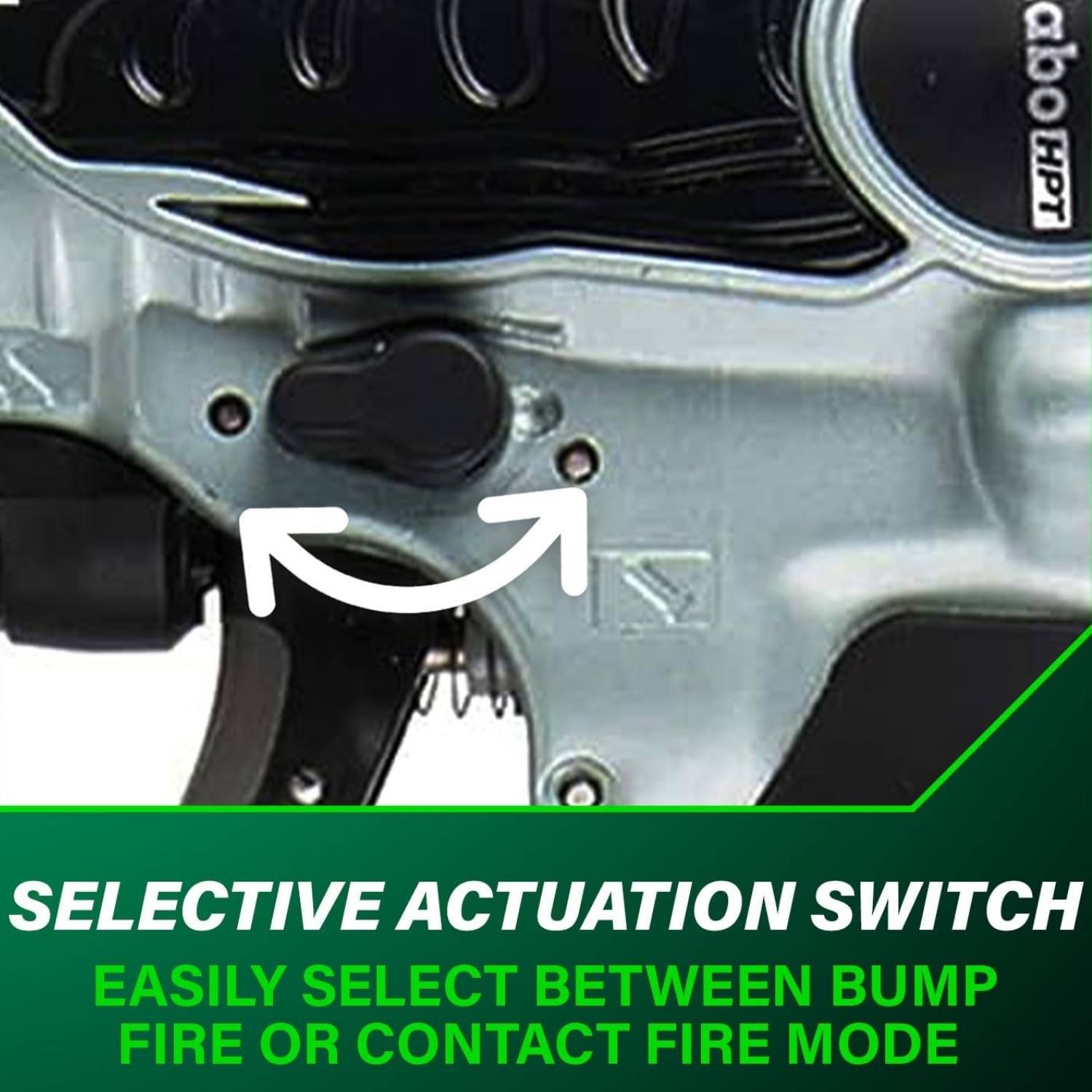
The selective actuation switch represents one of the most practical features on the NT50AE2. This switch lets you instantly toggle between sequential firing mode and bump firing mode, adapting the tool’s behavior to different working situations.
Sequential firing mode requires you to depress the safety tip against your work surface and then pull the trigger for each individual nail. This mode gives you maximum precision and control, making it ideal when you’re placing nails in visible locations where accuracy matters. When installing crown molding or attaching decorative trim, sequential mode ensures each nail goes exactly where you intend.
Bump firing mode, sometimes called contact trip mode, lets you hold down the trigger and fire nails simply by pressing the safety tip against your work surface. This rapid-fire capability dramatically increases speed when you’re attaching long runs of baseboard or installing repetitive elements where exact placement is less critical.
Having both modes available without tool changes or complicated adjustments means you can work at the optimal speed for each task. You’re not forced to choose between a precision tool and a production tool—the NT50AE2 functions as both.
Tool-Free Depth Adjustment for Perfect Drives Every Time
One of the most frustrating aspects of using brad nailers is achieving consistent nail depth. Drive a nail too shallow and it protrudes above the surface, requiring additional work to set it properly. Drive it too deep and you damage the work surface or create a divot that requires extensive filling and sanding.
The NT50AE2 addresses this challenge with a tool-free depth adjustment dial. Located conveniently on the nose of the nailer, this dial lets you fine-tune driving depth on the fly without stopping to grab an Allen key or screwdriver.
This feature proves invaluable when working with materials of varying hardness. When you transition from soft pine baseboard to rock-hard oak door casing, you can dial in the perfect depth in seconds. When your air compressor pressure fluctuates slightly throughout the day—a common occurrence on job sites—quick depth adjustments keep your finish quality consistent.
The ability to adjust depth without tools also means you’re more likely to actually use this feature. When adjustment requires stopping, finding the right tool, and fiddling with set screws, many users simply leave the setting alone and accept whatever results they get. The NT50AE2’s dial makes optimization effortless.
No-Mar Tip: Protecting Your Work Surface
The no-mar tip on the NT50AE2’s nose might seem like a minor detail, but it prevents a problem that has ruined countless otherwise-perfect finish jobs. This tip creates a protective barrier between the tool’s metal nose and your work surface.
Without this protection, the repeated contact between metal and wood inevitably leaves marks, dents, and scuffs. These blemishes are especially noticeable on pre-finished materials or stained surfaces where you can’t simply sand them away. The no-mar tip eliminates this concern entirely.
The tip is replaceable, which matters because these protective components do eventually wear out from heavy use. Rather than having to baby the tool or live with marking issues once the tip wears down, you simply install a fresh tip and continue working.
Reload Indicator: Never Fire a Blank Again
The magazine-mounted reload indicator seems simple, but it addresses a surprisingly common and annoying problem. When you run out of nails mid-task, you often don’t realize it until you’ve already pulled the trigger several times, wondering why nothing’s happening.
These “blank fires” aren’t just inefficient—they can actually damage certain materials. The blast of air without a nail can leave marks on softwoods or blow debris into freshly applied adhesive. The reload indicator eliminates this problem by clearly showing when nail supply is running low.
This visual warning gives you time to finish the current piece you’re working on and then reload, rather than running out mid-board and having to stop at an awkward moment. For professionals working on time-sensitive projects, these seemingly small efficiency improvements add up to meaningful time savings across a day’s work.
360-Degree Adjustable Exhaust Port
Every pneumatic nailer exhausts air with each firing cycle. Where that exhaust goes matters more than you might initially think. Exhaust directed at your work surface can blow away freshly applied wood glue, scatter sawdust onto wet stain, or kick debris into your face.
The NT50AE2’s 360-degree adjustable exhaust port solves this problem elegantly. You can direct exhaust away from your work surface, away from your face, or in whatever direction proves least problematic for the specific task at hand.
This adjustment is tool-free and can be changed as needed throughout your work. When you’re working in a corner where exhaust in the usual direction would blow dust onto adjacent walls, a quick adjustment keeps your workspace clean. When installing crown molding with exhaust blowing directly into your eyes, rotating the port makes the job far more comfortable.
The Weight Advantage: Why 2.2 Pounds Matters
Specifications list the NT50AE2 at 2.2 pounds, but that number doesn’t convey why this light weight matters so profoundly in actual use. Let’s explore how this weight advantage translates to practical benefits.
All-Day Comfort Without Fatigue
Finish carpentry isn’t a sprint—it’s a marathon. Installing crown molding around an entire room, hanging multiple doors with casing, or baseboard-ing a house means hours of holding a nailer in various positions. Every ounce of tool weight translates directly to arm and shoulder fatigue.
At 2.2 pounds, the NT50AE2 essentially disappears in your hand compared to heavier alternatives. This isn’t about being strong enough to hold a heavier tool—it’s about the cumulative strain over hundreds or thousands of nail drives throughout a day.
Professionals particularly appreciate this characteristic when working on large projects where finish work continues for days or weeks. Starting day three with fresh arms rather than already-fatigued shoulders means maintaining quality and productivity when it matters most.
Overhead Work Becomes Manageable
Crown molding installation tests the limits of comfort and endurance. You’re working overhead with your arms extended, often standing on a ladder, holding both the molding and the nailer in precise position. Every extra ounce of nailer weight makes this already-challenging task more difficult.
The NT50AE2’s light weight transforms overhead work from an endurance test into a manageable task. You can maintain precise control and accuracy even after the first several pieces of molding, when fatigue would normally begin degrading your work quality with heavier tools.
Precision in Awkward Positions
Finish carpentry often requires working in cramped spaces, at odd angles, or in positions where you can’t get ideal leverage. Installing casing around an interior door while crouched in a closet. Attaching trim in a tight corner where you’re reaching around obstacles. Securing molding while standing on a ladder leaning into a cathedral ceiling.
Light weight means you maintain fine motor control even when working from suboptimal positions. Heavier tools require more muscular effort to hold steady, and that effort reduces your ability to make precise adjustments and place nails exactly where needed.
Best Applications for the Metabo HPT NT50AE2
Understanding what the NT50AE2 excels at helps you deploy it effectively and know when to reach for different tools. Let’s explore the specific applications where this brad nailer delivers its best results.
Crown Molding Installation
Crown molding represents the perfect application for 18-gauge brad nailers. The molding typically isn’t structural—you’re securing decorative trim that doesn’t bear loads. The thin brads provide ample holding power while leaving minimal holes that virtually disappear after a light fill and paint.
The NT50AE2’s light weight becomes especially important during crown installation. Hours of overhead work with arms extended taxes even experienced installers. The 2.2-pound tool means you maintain precision throughout the project rather than fighting fatigue-induced accuracy degradation.
When shooting crown molding, the selective actuation switch proves its value. Use sequential mode for the critical corner joints where precision matters most. Switch to bump mode for the long straight runs between corners where speed increases efficiency without sacrificing quality.
Baseboard and Trim Installation
Baseboard installation involves firing hundreds or even thousands of nails over the course of a typical residential project. The NT50AE2’s bump fire mode lets you work quickly through straight runs, while the depth adjustment ensures consistent finish across different wall materials and conditions.
The no-mar tip shines during baseboard work, protecting pre-finished boards from the scuffs and dents that would otherwise require touch-up work. When you’re installing expensive pre-finished hardwood baseboards, this protection is essential for maintaining the factory finish.
Door and Window Casing
Casing installation around doors and windows benefits from the NT50AE2’s precision and control. These are highly visible applications where nail placement accuracy matters tremendously. A nail driven slightly off-angle or poorly positioned stands out as a quality deficiency.
The sequential firing mode gives you the control needed for casing work. The tool-free depth adjustment lets you dial in perfect setting regardless of whether you’re working with soft pine, medium-density fiberboard, or hardwood materials.
Decorative Trim and Wainscoting
Decorative trim elements—chair rail, picture rail, shadow boxes, wainscoting panels—all fall perfectly within the NT50AE2’s capability range. The thin 18-gauge brads secure these elements without splitting even relatively delicate components.
When installing wainscoting panels or beadboard, the reload indicator helps maintain workflow. You can monitor nail supply and reload during natural breaks rather than running empty mid-panel and interrupting your rhythm.
Cabinet Face Frame Assembly
While not its primary application, the NT50AE2 works beautifully for assembling cabinet face frames. The brads provide sufficient holding power while glue cures, and the thin gauge won’t split narrow stiles or rails.
The light weight becomes advantageous when assembling multiple cabinets over extended periods. You’re picking up and putting down the nailer repeatedly, and every ounce you don’t have to manipulate reduces cumulative fatigue.
Setting Up Your Metabo HPT NT50AE2 for Optimal Performance
Getting the best results from your NT50AE2 requires proper setup and adjustment. Let’s walk through the critical steps that ensure optimal performance.
Air Pressure Configuration
Pneumatic nailers are sensitive to air pressure, and finding the optimal pressure for your NT50AE2 ensures consistent driving without damaging materials. Too little pressure leaves nails protruding from the surface. Too much pressure drives nails too deep or potentially damages workpieces.
Start with your compressor set to 70-90 PSI—the typical operating range for most finish nailers. Make test drives on scrap material matching what you’ll be installing. If nails aren’t seating properly, increase pressure incrementally. If they’re driving too deep even with depth adjustment backed off, reduce pressure.
Remember that pressure at the tool differs from pressure at the compressor, especially if you’re working through long air hoses. Pressure drop across 50 feet of hose can be significant. If possible, measure pressure at the tool itself using an inline gauge to know exactly what pressure you’re delivering.
Lubrication Best Practices
Pneumatic tools require regular lubrication to maintain optimal performance and longevity. Add a few drops of pneumatic tool oil into the air inlet before each use, and again after every 1000 nails or four hours of continuous use, whichever comes first.
An inline oiler installed at your compressor automates this lubrication, delivering consistent amounts with every trigger pull. This approach ensures the tool receives proper lubrication even during extended work sessions where manual oiling might be forgotten.
Don’t overlook lubrication thinking the tool will continue functioning adequately. Proper lubrication prevents internal wear, maintains consistent firing force, and prevents the misfires and jams that result from dried-out or corroded internal components.
Loading Nails Correctly
Proper nail loading prevents jams and ensures reliable feeding. Open the magazine, insert a stick of 18-gauge brads with the pointed ends facing down and out toward the nose. Close the magazine firmly until it latches.
Use quality fasteners designed specifically for pneumatic nailers. Cheap nails with inconsistent dimensions or poor adhesive on the collation strip cause feeding problems that waste time and test patience. The money saved on discount fasteners rarely justifies the frustration and lost productivity from frequent jams.
Depth Adjustment Methodology
Before starting any project, make test drives on scrap material. Set the depth adjustment dial to middle position initially. Fire several nails and examine how they’re seating. If they’re protruding, increase depth. If they’re countersinking too deeply, reduce depth.
Make adjustments incrementally. The difference between proper seating and over-driving can be surprisingly small, especially when working with softwoods. Small adjustments let you zero in on perfect depth without overshooting and requiring corrections in the opposite direction.
Troubleshooting Common Issues
Even quality tools occasionally experience problems. Understanding common issues and their solutions keeps you working efficiently rather than sidelined by frustration.
Nail Jams and How to Clear Them
Nail jams happen eventually with any brad nailer. The NT50AE2 makes jam clearing straightforward. Disconnect the air supply first—safety always comes first when opening any part of the nailer. Open the magazine and remove remaining nails. Open the nose piece or driver blade access point and remove the jammed fastener using needle-nose pliers.
Most jams result from damaged or low-quality fasteners rather than tool defects. Inspect the stick of nails where the jam occurred. If you see bent nails, separated collation, or other damage, discard that section rather than attempting to use it.
Inconsistent Driving Depth
If nails suddenly start driving inconsistently despite unchanged depth settings, several factors might be responsible. Low air pressure causes weak driving. Check your compressor and ensure it’s maintaining proper pressure. Verify your air hose isn’t kinked or obstructed.
Insufficient lubrication also affects driving consistency. Internal components binding from lack of lubrication can’t deliver full driving force. Add several drops of tool oil and fire several nails into scrap to redistribute lubrication throughout internal components.
Air Leaks
Air leaking from anywhere except the exhaust port indicates a problem requiring attention. Common leak points include the trigger valve, nose seals, and air inlet connection. Often, leaks result from dried-out or damaged O-rings that require replacement.
Minor leaks from the trigger valve area sometimes resolve with lubrication. Add extra tool oil and work the trigger repeatedly to distribute oil throughout the valve mechanism. If leaking persists, O-ring replacement is likely necessary.
Frequent Misfires
If the tool fires air but doesn’t drive nails reliably, several issues might be responsible. Low air pressure can’t generate sufficient driving force. Worn driver blade doesn’t properly transfer energy to fasteners. Damaged or improper fasteners won’t feed and fire correctly.
Work through these possibilities systematically. Verify air pressure first—it’s the easiest check. Try a fresh stick of high-quality nails to eliminate fastener problems. If issues persist with proper pressure and good fasteners, internal wear might require professional service.
Maintenance That Extends Tool Life
Proper maintenance keeps your NT50AE2 functioning optimally for years. These practices take minimal time but deliver substantial longevity benefits.
Daily Maintenance Routine
At the end of each work session, add several drops of pneumatic tool oil into the air inlet. Fire several nails into scrap to distribute oil throughout internal components. Wipe down exterior surfaces to remove sawdust, dirt, and accumulated debris.
Clear any sawdust or debris from the nose area and magazine. These particles can interfere with nail feeding and safety mechanisms. A small brush or compressed air makes quick work of cleanup.
Weekly Deep Cleaning
Once weekly during periods of regular use, perform more thorough cleaning. Remove the magazine and clean inside thoroughly. Clear the nose area of any buildup. Check the no-mar tip for wear and replace if significantly damaged.
Inspect air hose connections and fittings. Tighten any loose connections and verify the quick-connect coupling engages properly. Examine the air hose itself for cracks, abrasions, or other damage that could cause leaks or failures.
Long-Term Storage Preparation
When storing the NT50AE2 for extended periods between projects, take extra preparation steps. Add generous amounts of tool oil through the air inlet and work the trigger mechanism repeatedly to distribute oil throughout internals. This coating protects against corrosion during storage.
Remove all fasteners from the magazine. Nails left loaded long-term can develop corrosion that transfers to the magazine feed mechanism. Store the tool in its case if possible, protecting it from dust, moisture, and potential impacts.
Comparing the NT50AE2 to Alternative Brad Nailers
Understanding how the Metabo HPT NT50AE2 stacks up against competing options helps you make informed purchasing decisions or appreciate what you already own.
Versus Battery-Powered Brad Nailers
Cordless battery-powered brad nailers offer obvious convenience—no compressor or air hose required. However, they sacrifice several advantages that pneumatic tools maintain. Battery nailers weigh significantly more due to the battery pack, typically 4-6 pounds versus the NT50AE2’s 2.2 pounds.
Driving power can diminish as batteries discharge over a work session. The NT50AE2 delivers identical driving force from first nail to thousandth nail. Battery tools also require charging downtime, while pneumatic tools work continuously as long as the compressor runs.
For professional users already owning compressors for other pneumatic tools, the battery nailer’s convenience advantage diminishes. You’re bringing a compressor to the job site anyway, so the air hose isn’t an additional burden.
Versus Other Pneumatic Brad Nailers
Compared to competing pneumatic 18-gauge brad nailers, the NT50AE2 holds its own across multiple dimensions. It matches or beats most competitors on weight while offering features like selective actuation and tool-free depth adjustment that some pricier alternatives lack.
Build quality rivals tools costing fifty to one hundred percent more. The aluminum housing and magazine deliver durability without excessive weight. Internal components withstand the rigors of professional use rather than quickly degrading under daily demands.
Value Proposition: Is the NT50AE2 Worth Your Investment?
Every tool purchase represents an investment of hard-earned money. Does the Metabo HPT NT50AE2 deliver sufficient value to justify its cost?
Price Versus Performance
The NT50AE2 occupies the sweet spot where professional capability meets reasonable pricing. It costs significantly less than premium brad nailers from brands trading primarily on name recognition, while delivering comparable or superior performance for typical finish carpentry applications.
You’re not paying for features you’ll never use or brand prestige that doesn’t translate to better results. The money goes into quality components, thoughtful design, and the features that matter for getting actual work done efficiently.
Professional Versus DIY Considerations
For professional carpenters and contractors, the NT50AE2 represents excellent value. It withstands daily use on demanding job sites while costing less than “professional-grade” alternatives. The money saved versus premium options buys additional tools or returns to your bottom line as profit.
DIY users benefit equally from the quality-to-price ratio. You get professional-level performance for projects where quality matters, without investing professional-level money. The tool delivers results that make your work look skilled rather than amateurish.
Long-Term Cost of Ownership
Beyond purchase price, consider long-term ownership costs. The NT50AE2’s durability means it continues functioning for years rather than requiring replacement. Maintenance costs remain minimal—primarily pneumatic tool oil and occasional replacement of wear items like the no-mar tip.
The time savings from efficient operation and reduced troubleshooting deliver ongoing value. Professional users save billable hours. DIY users complete projects faster, freeing time for other activities.
Making Your Decision: Is the NT50AE2 Right for You?
After exploring every angle of the Metabo HPT NT50AE2, how do you decide if it’s the right brad nailer for your specific needs?
This tool makes exceptional sense if you regularly tackle finish carpentry projects—whether professionally or as a serious hobbyist. The combination of light weight, dual firing modes, and thoughtful features like tool-free depth adjustment deliver genuine advantages that translate to better results and more enjoyable work.
It’s particularly appropriate if you already own an air compressor for other tools. You’re leveraging existing equipment, and the pneumatic design means you’re not adding another battery platform to maintain and charge. The light weight and consistent power delivery make it ideal for extended trim projects where fatigue becomes a factor.
The NT50AE2 is less suitable if you work primarily in locations without electricity for running a compressor, or if you need maximum portability without any auxiliary equipment. In those specific situations, a battery-powered nailer might better fit your circumstances despite the weight and power trade-offs.
For most users undertaking interior finish work, installing trim and molding, or working on furniture and cabinet projects, the Metabo HPT NT50AE2 delivers professional results at a price point that doesn’t require professional justification. It’s simply an excellent tool that performs reliably, feels comfortable, and makes finish carpentry less tedious and more satisfying.
Conclusion: A Reliable Tool for Quality Finish Work
The finish carpentry world offers no shortage of brad nailer options, from budget models that barely function to premium alternatives with price tags that seem disconnected from actual performance. The Metabo HPT NT50AE2 occupies the sensible middle ground where quality, features, and price align logically.
At 2.2 pounds with selective actuation, tool-free depth adjustment, and thoughtful details like the no-mar tip and reload indicator, this nailer provides the features that matter for actual work. It’s not burdened with gimmicks or marketed based on brand prestige rather than capability.
Whether you’re a professional carpenter installing trim in multiple houses monthly or a dedicated DIYer tackling one careful project at a time, the NT50AE2 delivers consistent, reliable performance that makes your work look skilled. The nail holes virtually disappear, the depth stays consistent, and the light weight keeps your arms fresh throughout long sessions.
Good tools don’t just make work faster—they make work better and more enjoyable. When your nailer consistently places brads exactly where you want them at perfect depth without marking the work surface, finish carpentry transforms from a frustrating battle into a satisfying craft. That’s the difference a quality tool makes, and that’s what the Metabo HPT NT50AE2 delivers every time you pull the trigger.