TOP CUSTOMER REVIEW
It’s a little challenging to work with at first since it’s a pretty sturdy steel product and joining the pieces together takes a little getting used to. That said, it’s a great looking product and I wouldn’t hesitate to order again if needed.
– Benjamin O.
Corten Metal Edging | Corten Garden Edging | Core 10 Steel Edging
High-grade weathering steel with a protective rust finish that never needs painting. Quick installation with integrated spikes, no digging required. Customise your length, control grass invasion, & create beautiful garden definition
Price range: $77.00 through $88.00
per metre
A Variety Of Options to Choose From
NO MINIMUMS - Order just the length (in metres) you need
all prices include GST
FREE FAST DELIVERY ACROSS AUSTRALIA ON ALL ORDERS $75+ or more - (save $27.50)
Our high grade weathering steel has a unique look and naturally oxidizing finish.
Weathering steels are a group of steel alloys which were developed to remove the need for painting which form a stable rust-like appearance when exposed to the elements.
SPECIFICATIONS - 100mm Face Height

- 1075mm lengths (1m sections with a 75mm interlock overlap)
- 100 mm face height.
- Thickness (gauge) is 1.5mm
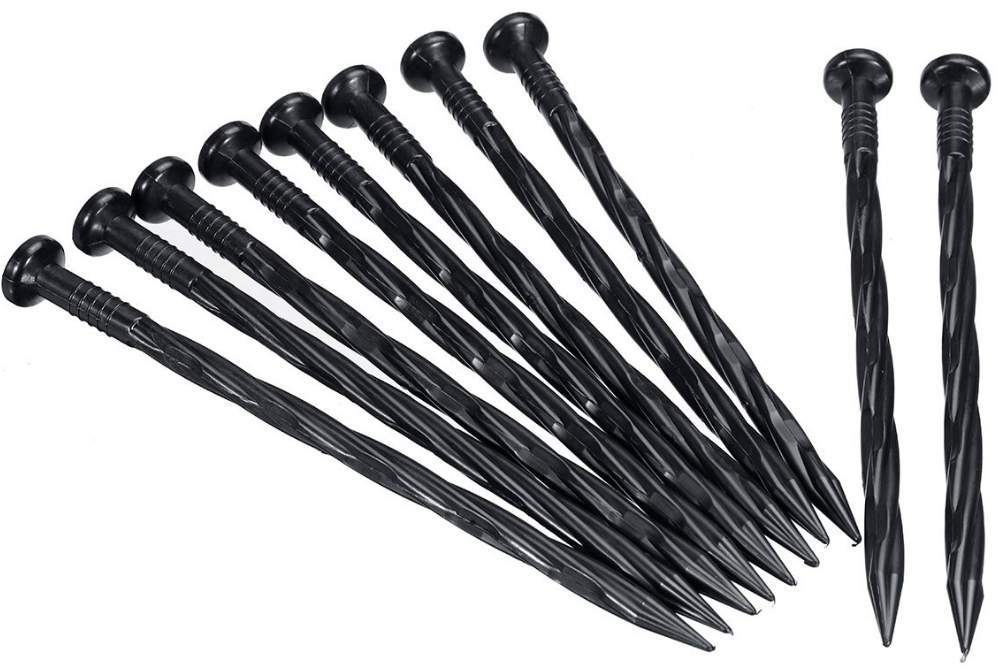
- Spikes are 100mm long (x7 spikes per metre length)
- Weight per length – 1.6kg
SPECIFICATIONS - 150mm Face Height

- 1075mm lengths (1m sections with a 75mm interlock overlap)
- 150 mm face height.
- Thickness (gauge) is 1.5mm
- Spikes are 100mm long (x7 spikes per metre length)
- Weight per length – 1.7kg
DUE TO CURRENT DEMAND PLEASE ALLOW 5-7 DAYS DELIVERY
Direct To Your Door - All Across Australia
NO MINIMUMS - Order just the length (in metres) you need
While simply acting as a separator of two different areas, rusting metal garden edging is considered a design secret of professional landscapers. The corten lawn edging keeps plants and garden materials in place.
It also separates grass and pathways to give off a clean-cut and organised look that makes rusted garden edging visually appealing.
EASY DO-IT-YOURSELF
DEFINES YOUR GARDEN
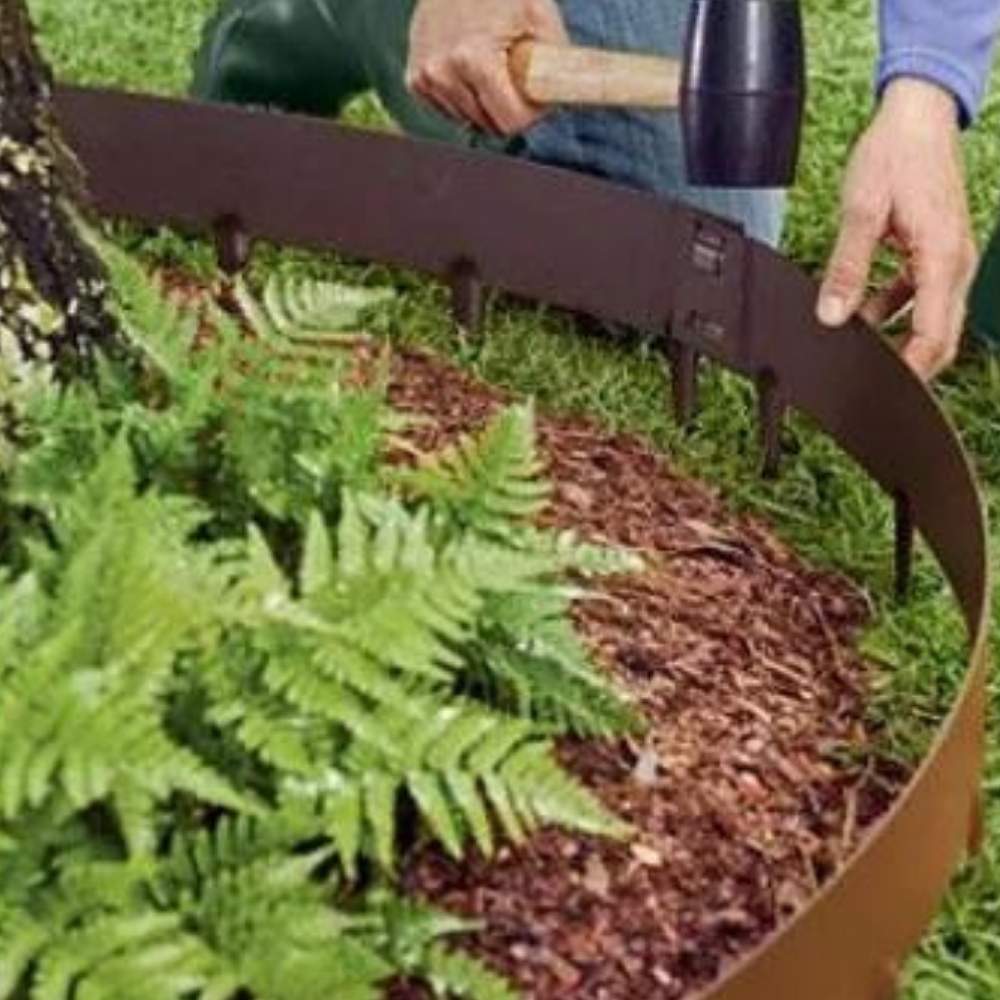
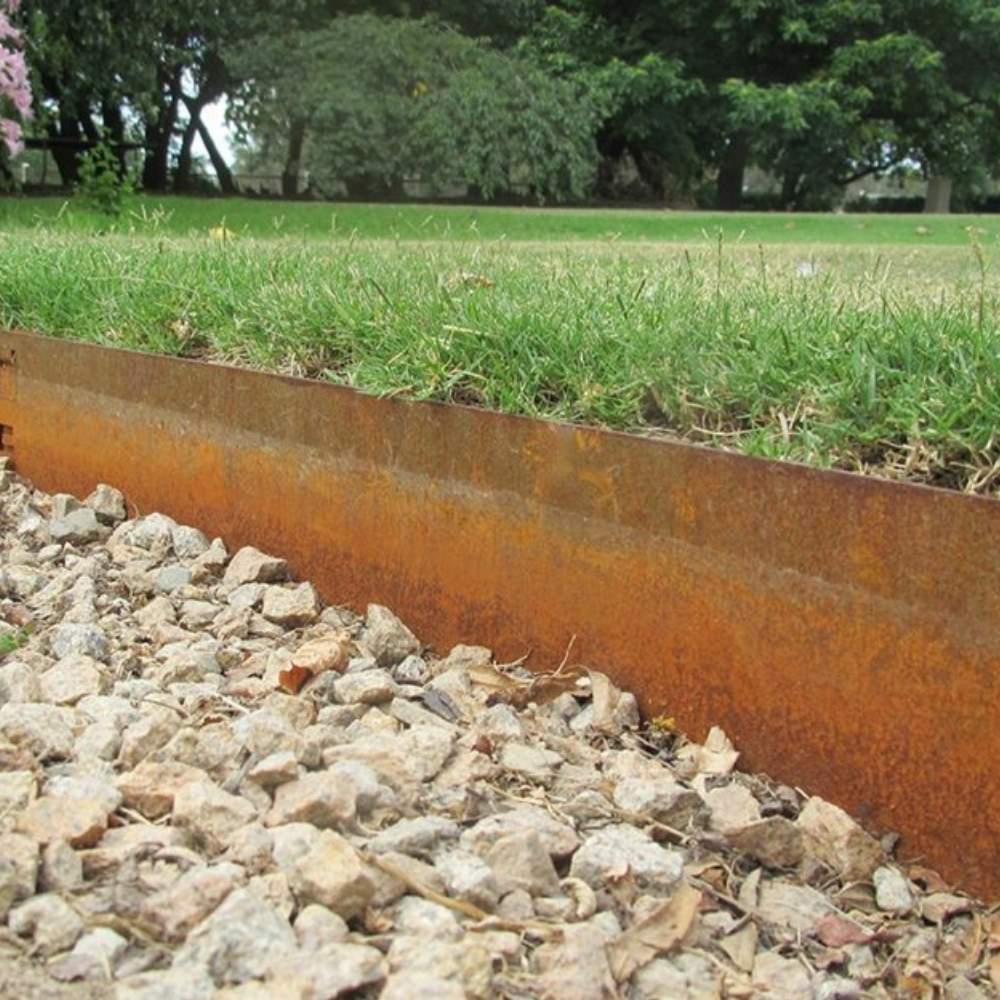
The rust finish complements any existing Cor-Ten features and brings an element of history to the garden. Very effective at controlling grass runners – when 30mm of the actual edge as well as the spikes is hammered into the ground it creates an effective barrier that will stop the runners invading paths or garden beds.
CUSTOMISABLE LENGTH
Rusted garden edging
Rusted garden edging can be made of bare cold rolled steel or Corten steel. The steel used for our lawn edging is made of strong, long lasting, and durable Corten/A606-4 Steel.
Corten steel has a significantly longer lifespan than bare cold rolled steel. It will hold its shape and not bend under pressure.
The beautiful rustic finish of Corten Landscape Edging and Stakes will allow it to seamlessly blend into many different landscape styles.
What is Weathering Steel (Corten Steel)?
Weathering steel, best-known under COR-TEN steel and sometimes written without the hyphen as “Corten steel”, is a group of steel alloys which were developed to eliminate the need for painting, and form a stable rust-like appearance if exposed to the weather for several years.
“Weathering” means that due to their chemical compositions, these steels exhibit increased resistance to atmospheric corrosion compared to other steels.
This is because the steel forms a protective layer on its surface under the influence of the weather. The corrosion-retarding effect of the protective layer is produced by the particular distribution and concentration of alloying elements in it.
The layer protecting the surface develops and regenerates continuously when subjected to the influence of the weather. In other words, the steel is allowed to rust in order to form the ‘protective’ coating.
-
HOW DO I KNOW IF MY ORDER HAS BEEN SHIPPED?
Once your order is shipped, it will be marked as complete in our database and you will receive a confirmation email with a tracking number.
-
I HAVEN'T RECEIVED MY ORDER YET! IS IT LOST?
If you have any concerns with your order, please contact our support team by email and they will be glad to assist you. Most emails are answered within 1 business day.
Support Team: [email protected]
-
WHAT CURRENCY ARE THE PRICES DISPLAYED IN?
All of our prices are displayed in $AUD - Australian Dollars and include GST
-
DO I GET A RECEIPT FOR MY ORDER?
You will be sent a receipt for your order by email after payment is made. You will also receive a confirmation email with a tracking number once your item has been shipped.
-
WHAT ARE YOUR DELIVERY OPTIONS AND HOW LONG WILL IT TAKE?
- AUSTRALIA: Free delivery, 5-7 days
- Other countries: Free delivery, 7-10 days
OUR DELIVERY PARTNERS

-
DO YOU HAVE A SHOP LOCATION?
We are a “online supplier”, with no physical shop or premises. In this way, we are able to pass our considerable savings directly to you.
-
WHICH PAYMENT METHODS ARE ACCEPTED?
We currently only accept credit card payments, PayPal & Crypto currency. More payment methods will be added in the future.
-
Can Corten Metal Edging be used around vegetable or herb gardens?
Can Corten Metal Edging be used around vegetable or herb gardens? Yes—it keeps soil neat, prevents mixing of varieties and adds a refined professional touch to edible gardens.
-
Can Corten Garden Edging help reduce ongoing garden maintenance?
Can Corten Garden Edging help reduce ongoing garden maintenance? Yes—it forms sturdy boundaries that prevent mulch, gravel and lawn runners from spreading, keeping outdoor spaces neatly defined.
-
Does Corten Garden Edging pair well with native Australian plants?
Does Corten Garden Edging pair well with native Australian plants? Definitely—its earthy tones complement native textures, creating a natural yet modern landscape appeal.
-
How does Core 10 Steel Edging support clean garden geometry?
How does Core 10 Steel Edging support clean garden geometry? It shapes crisp borders that highlight garden contours and create strong visual structure in contemporary outdoor designs.
-
How does Corten Metal Edging enhance the look of outdoor entertaining areas?
How does Corten Metal Edging enhance the look of outdoor entertaining areas? It frames patios, fire pits and seating zones with a contemporary edge, adding warmth and visual depth.
-
Is Corten Garden Edging suitable for both curved and straight borders?
Is Corten Garden Edging suitable for both curved and straight borders? Yes—its flexible sections accommodate flowing shapes while retaining strong, defined lines.
-
What makes Core 10 Steel Edging suitable for sloped garden areas?
What makes Core 10 Steel Edging suitable for sloped garden areas? Its rigid build stabilises soil and prevents erosion, ensuring slopes maintain their shape even during heavy rainfall.
-
Can Corten Metal Edging improve the accuracy of lawn boundaries?
Can Corten Metal Edging improve the accuracy of lawn boundaries? Absolutely—its rigid form stops grass from creeping into garden beds and reduces trimming time.
-
Why choose Core 10 Steel Edging for long-term garden structure?
Why choose Core 10 Steel Edging for long-term garden structure? The alloy develops a stable patina that resists degradation, offering durable boundary control for pathways, lawns and planting zones.
-
How does Core 10 Steel Edging support clean transitions between materials?
How does Core 10 Steel Edging support clean transitions between materials? It creates defined lines between turf, stone, mulch and paving, improving layout clarity and ease of maintenance.
-
How does Core 10 Steel Edging help control soil erosion?
How does Core 10 Steel Edging help control soil erosion? Its robust profile stabilises soil on slopes and raised beds, helping prevent washout during rain and irrigation.
-
Can Corten Metal Edging help retain mulch in garden beds?
Can Corten Metal Edging help retain mulch in garden beds? Yes—its raised edge stops mulch from spilling onto paths or lawns, maintaining tidy garden surfaces.
-
Can Corten Garden Edging enhance raised garden structures?
Can Corten Garden Edging enhance raised garden structures? Yes—it forms sturdy, upright boundaries that support soil while delivering an elegant, modern finish.
-
How does Corten Garden Edging assist in organising large garden spaces?
How does Corten Garden Edging assist in organising large garden spaces? It segments zones clearly—ideal for separating planting areas, lawns and pathways in expansive landscapes.
-
What visual impact does Core 10 Steel Edging create in garden layouts?
What visual impact does Core 10 Steel Edging create in garden layouts? It provides defined transitions that elevate the landscape’s overall structure, giving beds, paths and lawns crisp separation.
-
Does Core 10 Steel Edging work well in both residential and commercial projects?
Does Core 10 Steel Edging work well in both residential and commercial projects? Absolutely—its strong performance and architectural appearance make it suitable for public gardens, parks and home landscapes.
-
Why use Core 10 Steel Edging for gravel and stone pathways?
Why use Core 10 Steel Edging for gravel and stone pathways? It holds material firmly in place, preventing scatter and ensuring pathways remain clean and clearly defined.
-
How does Corten Metal Edging improve the presentation of pathways?
How does Corten Metal Edging improve the presentation of pathways? It keeps materials contained and creates a crisp border, helping paths remain tidy and visually refined.
-
Why is Core 10 Steel Edging considered a long-life edging solution?
Why is Core 10 Steel Edging considered a long-life edging solution? The steel self-protects through patination, reducing degradation and helping maintain structural integrity over time.
-
How does Corten Garden Edging enhance feature plant displays?
How does Corten Garden Edging enhance feature plant displays? Its warm-toned patina acts as a subtle frame, drawing attention to focal plants, sculptural arrangements or ornamental trees.
-
Why choose Corten Metal Edging for low-maintenance landscaping?
Why choose Corten Metal Edging for low-maintenance landscaping? It naturally strengthens over time through patination, requiring minimal upkeep while maintaining strong visual appeal.
-
Can Corten Metal Edging handle changing outdoor conditions?
Can Corten Metal Edging handle changing outdoor conditions? Yes—its weathering steel composition forms a stable patina barrier that enhances durability in fluctuating climates.
-
How does Core 10 Steel Edging contribute to long-lasting garden definition?
How does Core 10 Steel Edging contribute to long-lasting garden definition? It retains shape and structural clarity over time, ensuring pathways, lawns and garden beds remain sharply outlined.
-
Why is Corten Metal Edging ideal for modern architectural gardens?
Why is Corten Metal Edging ideal for modern architectural gardens? Its industrial style and weathered aesthetic add depth and sophistication, elevating the overall design impact.
-
How does Corten Garden Edging transform outdoor design?
How does Corten Garden Edging transform outdoor design? It provides clean geometric lines that enhance modern landscapes, helping separate lawns, pathways and garden beds with a striking sculptural finish.
-
How does Corten Garden Edging enhance symmetry and order outdoors?
How does Corten Garden Edging enhance symmetry and order outdoors? Its straight, consistent lines create balanced visuals and support precision-driven garden design.
-
Can Corten Garden Edging help maintain tidy gravel driveways?
Can Corten Garden Edging help maintain tidy gravel driveways? Yes—it holds gravel in place, reducing washout and providing a clearer boundary between driveways and garden beds.
-
How does Corten Metal Edging blend with natural garden materials?
How does Corten Metal Edging blend with natural garden materials? Its earthy, textured patina pairs effortlessly with stone, timber and greenery, creating a balanced, cohesive landscape aesthetic.
-
Does Corten Garden Edging suit both contemporary and rustic garden styles?
Does Corten Garden Edging suit both contemporary and rustic garden styles? Absolutely—its warm patina complements modern geometry and traditional, earthy themes alike.
Corten Metal Edging: The Ultimate Guide to Creating Professional Garden Borders That Improve With Age
Have you ever driven past a beautifully landscaped garden and wondered what makes those crisp, defined borders look so professionally finished? Chances are, you were admiring the work of corten metal edging. This rust-coloured steel border has become the secret weapon of landscape designers and savvy homeowners who want that magazine-worthy garden appearance without the ongoing maintenance nightmare.
If you’re reading this, you’re probably tired of flimsy plastic edging that warps in the sun, timber borders that rot after a season or two, or concrete edges that crack and crumble. You want something that looks good, works properly, and doesn’t demand constant attention. That’s exactly what corten garden edging delivers, and it does so with a unique aesthetic that actually gets better over time.
In this comprehensive guide, we’re exploring everything you need to know about corten metal edging, from understanding what weathering steel actually is to installing it in your own garden. Whether you’re a DIY enthusiast planning a weekend project or a professional landscaper considering new materials, you’ll find practical insights that help you make informed decisions about this increasingly popular landscaping solution.
What Is Corten Metal Edging and Why Does It Look Rusty?
Let’s start with the basics, because corten steel is genuinely fascinating material once you understand what makes it special.
Corten metal edging, also known as weathering steel or COR-TEN steel, is a group of steel alloys specifically engineered to form a stable, rust-like appearance when exposed to weather. Now, before you think “rust sounds terrible for my garden,” hear me out. This isn’t the kind of rust that flakes off and destroys the metal underneath. It’s completely different.
The rust that forms on corten garden edging is actually a protective layer. When weathering steel is exposed to moisture and air, it develops a dense, tightly adhered oxide coating that prevents further corrosion from penetrating deeper into the metal. Think of it as the steel creating its own weatherproof jacket.
The Science Behind Weathering Steel
Corten steel contains small amounts of copper, chromium, and nickel mixed with the iron. These alloying elements are what make the magic happen. When the steel oxidises, these elements create a barrier layer that regenerates continuously when subjected to weather influences.
In practical terms, this means your COR-TEN steel edging develops that beautiful rust patina during the first few months of exposure, and then it stabilises. The corrosion effectively stops, but the appearance remains. You get the aesthetic of aged, rustic metal without the structural deterioration that comes with regular steel rust.
The Evolution of the Rust Finish
When you first install corten metal edging, it has a dark, almost purple-grey metallic appearance. Over the next few weeks to months, depending on your climate and weather exposure, that surface transforms into the characteristic orange-brown rust colour that corten is famous for.
This transformation isn’t a flaw, it’s the feature. Many homeowners find watching their edging develop its patina surprisingly satisfying. It’s like the garden is maturing and settling into its permanent character.
Why Professional Landscapers Choose Corten Garden Edging
Walk into any high-end garden centre or flip through contemporary landscaping magazines, and you’ll notice corten edging everywhere. There’s a reason professionals have embraced this material so enthusiastically.
The Clean Line Advantage
Professional landscaping is all about crisp definitions and intentional separations. Corten garden edging creates razor-sharp lines between different garden zones. Whether you’re separating lawn from garden beds, defining a gravel path, or creating raised planting areas, the thin profile of steel edging gives you precision that’s impossible to achieve with thicker materials.
That clean line doesn’t just look good initially, it holds its shape year after year. Unlike plastic or timber edging that warps, bends, or sags over time, properly installed corten metal edging maintains those perfect boundaries indefinitely.
Controlling Grass Runners and Root Systems
Here’s a practical benefit that matters enormously if you’ve ever battled invasive grass or spreading plant roots. When corten steel edging is installed with at least thirty millimetres buried below ground level, it creates an effective barrier that stops grass runners in their tracks.
For anyone who’s spent frustrating hours pulling couch grass or kikuyu out of garden beds, this barrier function alone justifies the investment. The edging doesn’t just look good, it actively prevents the creeping invasion that makes garden maintenance such a chore.
The Contemporary Aesthetic
Modern garden design often plays with contrasts: soft plants against hard materials, natural shapes beside geometric forms, organic colours alongside industrial finishes. Corten garden edging fits perfectly into this design philosophy.
The rust-orange patina complements virtually every plant colour. It works beautifully with grey-green natives, bright flowering perennials, deep green lawns, and pale stone mulches. This versatility means you can change your planting scheme without the edging looking out of place.
Comparing Corten Steel Edging to Other Materials
Before you commit to corten metal edging, it’s worth understanding how it stacks up against the alternatives you’re probably considering.
Corten Versus Timber Edging
Timber sleepers and wooden borders have been garden staples for decades, and they certainly have their place. However, they come with significant drawbacks that weathering steel eliminates entirely.
Timber rots. Even treated timber will eventually succumb to moisture, insects, and soil contact. You’re looking at replacement every five to ten years at best. Corten steel edging, by contrast, will outlast you. The protective rust layer means the structural integrity remains intact for decades.
Timber also requires more substantial installation. You need to account for the width of sleepers or planks, which takes up valuable planting space. COR-TEN steel edging, with its typical thickness of just 1.5 millimetres, barely intrudes on your garden area while still providing structural strength.
Corten Versus Plastic or Aluminium Edging
Plastic edging is cheap, and that’s about the only advantage it offers. It warps in heat, becomes brittle in cold, and looks exactly like what it is: cheap plastic in your garden. It also provides virtually no barrier against determined grass runners.
Aluminium edging avoids the warping problem but comes with its own issues. It’s softer than steel, meaning it bends more easily under pressure from soil movement or accidental impacts from lawn mowers. It also lacks the aesthetic warmth of weathering steel, maintaining a cold, metallic appearance that doesn’t integrate as naturally into garden settings.
Corten Versus Concrete or Stone Edging
Concrete and stone certainly offer permanence, but they sacrifice flexibility. Once installed, concrete edging is essentially immovable. If you want to adjust your garden layout later, you’re in for significant demolition and reinstallation work.
Corten metal edging, while durable, can be removed and repositioned if needed. The interlocking sections that many systems use make reconfiguration possible without destroying the materials. This adaptability matters more than you might think, especially if you’re someone who likes to evolve your garden over time.
Understanding COR-TEN Steel Specifications and Grades
Not all weathering steel is created equal, and understanding the specifications helps you make informed purchasing decisions.
What Does COR-TEN Actually Mean?
COR-TEN is actually a trademarked name developed by United States Steel Corporation. The name combines “COR” for corrosion resistance and “TEN” for tensile strength. While the trademark is specific to one manufacturer, the term has become somewhat generic for weathering steel in general.
You might also see references to A606-4 steel or simply “weathering steel” or “corten steel” without the hyphen. These are all describing essentially the same family of high-strength, low-alloy steels with enhanced atmospheric corrosion resistance.
Thickness and Gauge Considerations
Most quality corten garden edging uses steel between 1.5 and 2 millimetres thick. This provides the optimal balance between strength and workability. Thinner steel might save money but can buckle more easily under soil pressure. Thicker steel becomes unnecessarily difficult to work with and adds cost without meaningful benefits for residential applications.
The gauge (thickness) you need depends partly on the height of your edging. Taller edges, say 150 millimetres or more, benefit from slightly thicker steel to prevent flexing. Shorter edges of 75 to 100 millimetres can use the thinner gauges without any structural concerns.
Surface Finish Variations
Brand new corten metal edging typically arrives with a dark mill finish. Some suppliers offer pre-rusted edging that’s been treated to accelerate the patina development. Pre-rusted edging costs more but gives you that distinctive corten appearance immediately rather than waiting months for natural weathering.
The choice between mill finish and pre-rusted comes down to patience and budget. Functionally, they’re identical. The mill finish will rust naturally and eventually look the same as pre-rusted edging. If you’re installing in spring or summer with good weather exposure, the natural rusting happens relatively quickly anyway.
How to Install Corten Metal Edging: A Step-by-Step Guide
One of the genuine advantages of corten garden edging is that installation is well within the capabilities of most DIY enthusiasts. You don’t need specialised tools or professional help.
What You’ll Need
Before you start, gather your materials and tools. You’ll need your corten steel edging sections, obviously. Most systems come in one-metre lengths with interlocking ends and integrated spikes.
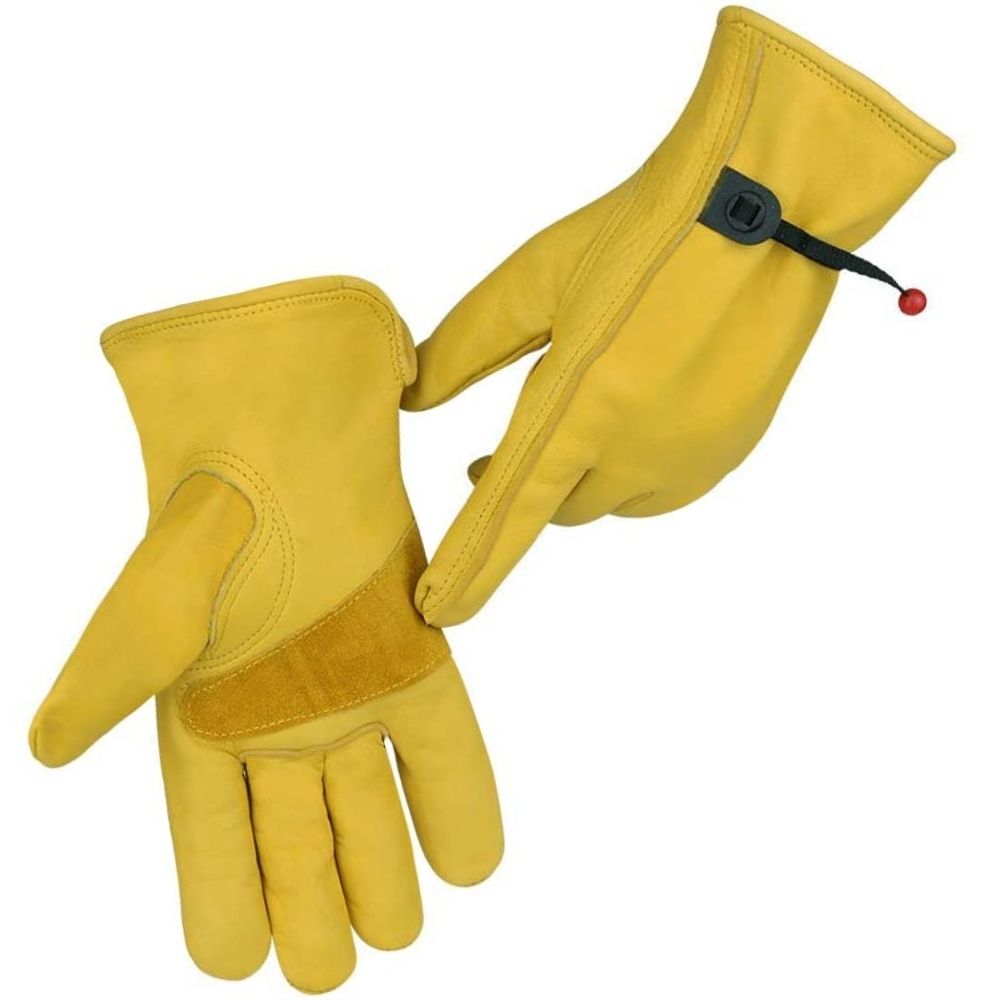
For tools, you need a rubber mallet or heavy hammer, a level, work gloves, and a tape measure. If you’re installing in particularly hard or rocky soil, a crowbar or pickaxe might help with creating the initial trench. For cutting edging to custom lengths, you’ll need an angle grinder with a metal cutting disc.
Preparing Your Garden Edge
Start by marking out your desired border line. Use a garden hose or rope to lay out curves, or string lines for straight edges. Step back and look at your layout from multiple angles before committing. It’s much easier to adjust now than after installation.
Clear any existing growth along your marked line. You want to expose the soil for easier installation and better assessment of ground conditions. If you’re dealing with particularly vigorous grass like kikuyu, consider using a sharp spade to slice through the root mat first.
Installing the First Section
Start at a corner or endpoint rather than the middle of a run. Position your first section along your marked line. The integrated spikes should be pointing downward into the soil.
Using your rubber mallet, tap the edging down gently. You want at least thirty millimetres of the face height below ground level for proper grass barrier function, but you can go deeper if you prefer. Work along the length of the section, tapping it down evenly.
Connecting Subsequent Sections
Most corten metal edging uses an overlap system where one end of each section fits over or into the previous section. This creates a continuous run without gaps or weak points.
Line up your second section with the first, ensuring the overlap is fully engaged. Tap this section down to match the height of the first section. Check with your level frequently to ensure you’re maintaining consistent height along the run.
Creating Corners and Curves
For right-angle corners, you have two options. You can bend the edging at a connection point, or you can cut sections to create mitred corners for a neater appearance. Bending is easier and faster. Mitring looks more professional but requires more work.
For gentle curves, corten steel edging is flexible enough to follow natural curves in your garden design. For tighter curves, you might need to make small relief cuts in the bottom edge of the edging to allow more flexibility without kinking the visible face.
Final Securing and Backfilling
Once your entire run is positioned and tapped down, walk the length and check for any sections that seem unstable or uneven. The integrated spikes do most of the securing work, but in loose or sandy soils, you might want to backfill against both sides of the edging to provide extra stability.
Tamp down the soil firmly against the edging on both sides. If you’re edging a lawn, you can simply press the turf back against the steel. For garden beds, add your mulch or plantings right up to the edging.
Maintenance Requirements for Weathering Steel Edging
Here’s some genuinely good news: corten garden edging requires almost no ongoing maintenance. That’s part of why it’s so popular among people who want beautiful gardens without endless upkeep.
The Initial Rusting Phase
During the first few months after installation, you’ll notice orange-brown rust runoff when it rains. This is completely normal and expected. The steel is developing its protective patina, and some loose oxide washes off in the process.
Be aware of this runoff if you have paving or light-coloured materials immediately adjacent to your new edging. The rust water can temporarily stain some surfaces. It usually weathers off naturally, or you can hose it away.
If you’re concerned about staining, you can accelerate the initial rusting process before installation by wetting the edging repeatedly over a week or two. This speeds up patina development and reduces the amount of loose rust that will run off after installation.
Long-Term Care
Once the patina has stabilised, which typically takes three to six months depending on your climate, you essentially have zero maintenance. The rust layer protects itself and regenerates if damaged.
You don’t need to paint, seal, oil, or treat weathering steel edging. In fact, you shouldn’t. Any coating would prevent the natural patina development and actually reduce the corrosion resistance.
Dealing with Damage or Scratches
If something scrapes or gouges your corten metal edging, exposing fresh metal, don’t panic. The exposed area will simply rust and blend back into the surrounding patina over time. This self-healing characteristic is one of weathering steel’s most practical advantages.
Design Ideas and Applications for Corten Steel Edging
Let’s explore some creative and practical ways to use corten garden edging in your landscape design.
Defining Lawn Edges
The most straightforward application is creating clean edges between lawn areas and garden beds. The thin profile of COR-TEN steel edging means you can mow right up to the edge without damaging your mower blades. It creates a perfect mowing strip that eliminates the need for manual edge trimming.
For lawn edges, installing the edging so it sits slightly above the lawn level (about ten to fifteen millimetres) helps prevent grass from growing over the top while still allowing you to mow comfortably.
Garden Bed Borders
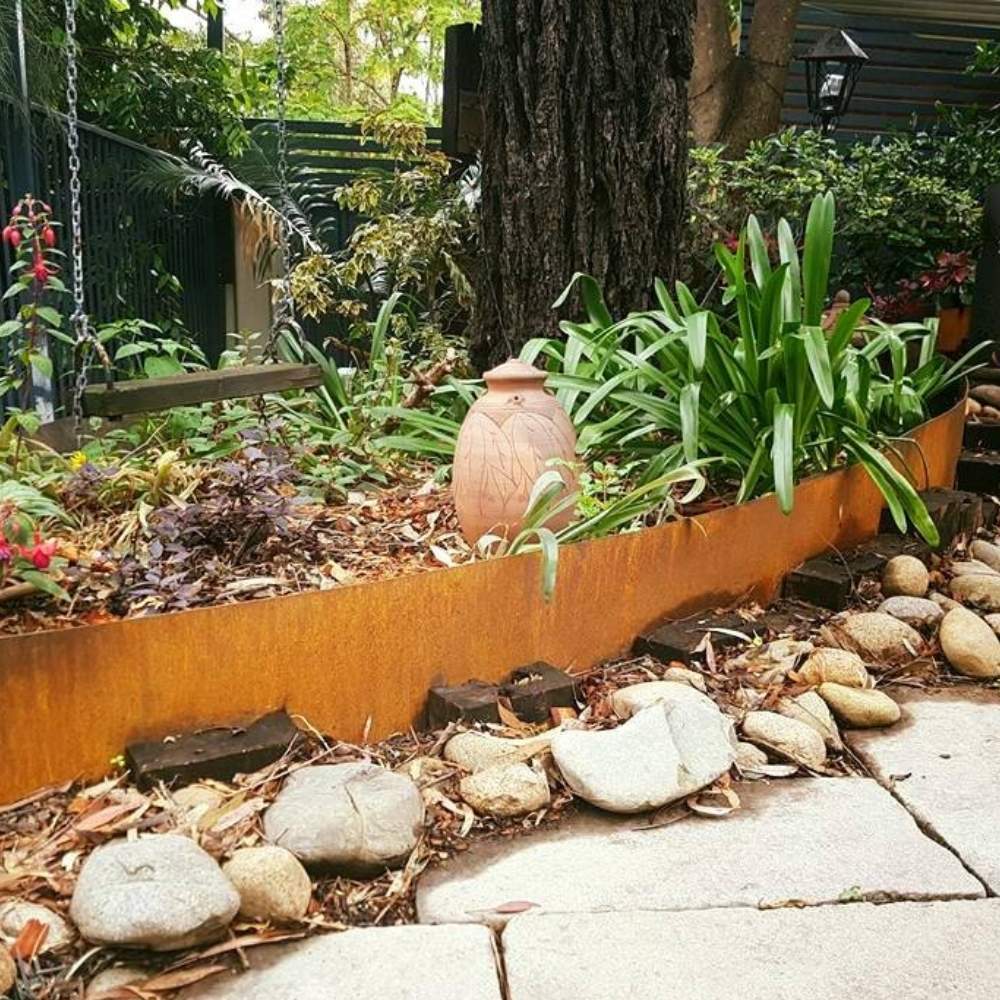
Using corten metal edging around garden beds serves both aesthetic and functional purposes. It contains mulch, prevents soil erosion, and creates visual definition that makes your plantings stand out.
Consider using different heights of edging within the same garden to create terraced levels. This works particularly well on sloped sites where you want to create distinct planting zones at different elevations.
Pathway Definition
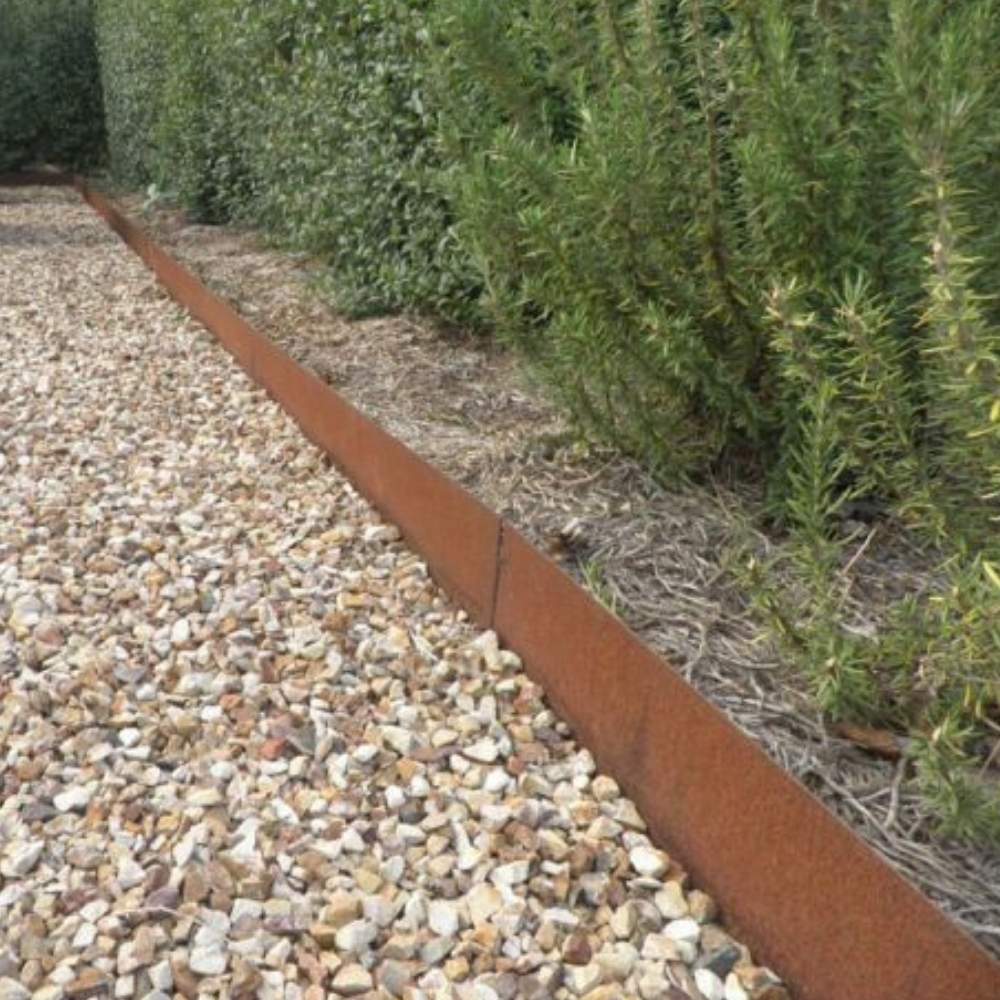
Whether you’re working with gravel paths, pavers, or decomposed granite, weathering steel edging provides the containment that keeps path materials where they belong. It also creates a psychological boundary that guides foot traffic without being obtrusive.
For gravel or loose materials, install your edging so the top edge is level with the finished path surface. This allows you to sweep or rake the path right up to the edge without material spilling over.
Raised Garden Beds
Taller corten garden edging, typically 300 millimetres or higher, can create contemporary raised beds. These work beautifully in modern garden designs and offer practical advantages for gardeners with mobility concerns.
For structural raised beds, you’ll need to add corner posts or additional bracing to handle the outward pressure from soil. The edging itself provides the wall surface, but it needs support at intervals to prevent bowing.
Tree Rings and Feature Circles
Creating circular or curved borders around specimen trees or as standalone planting features is another popular application. The flexibility of steel edging makes curves relatively easy to achieve.
Tree rings serve practical purposes too. They prevent mower damage to tree trunks and create a mulched zone that reduces competition from grass while making the tree a visual focal point.
Integrating with Other Materials
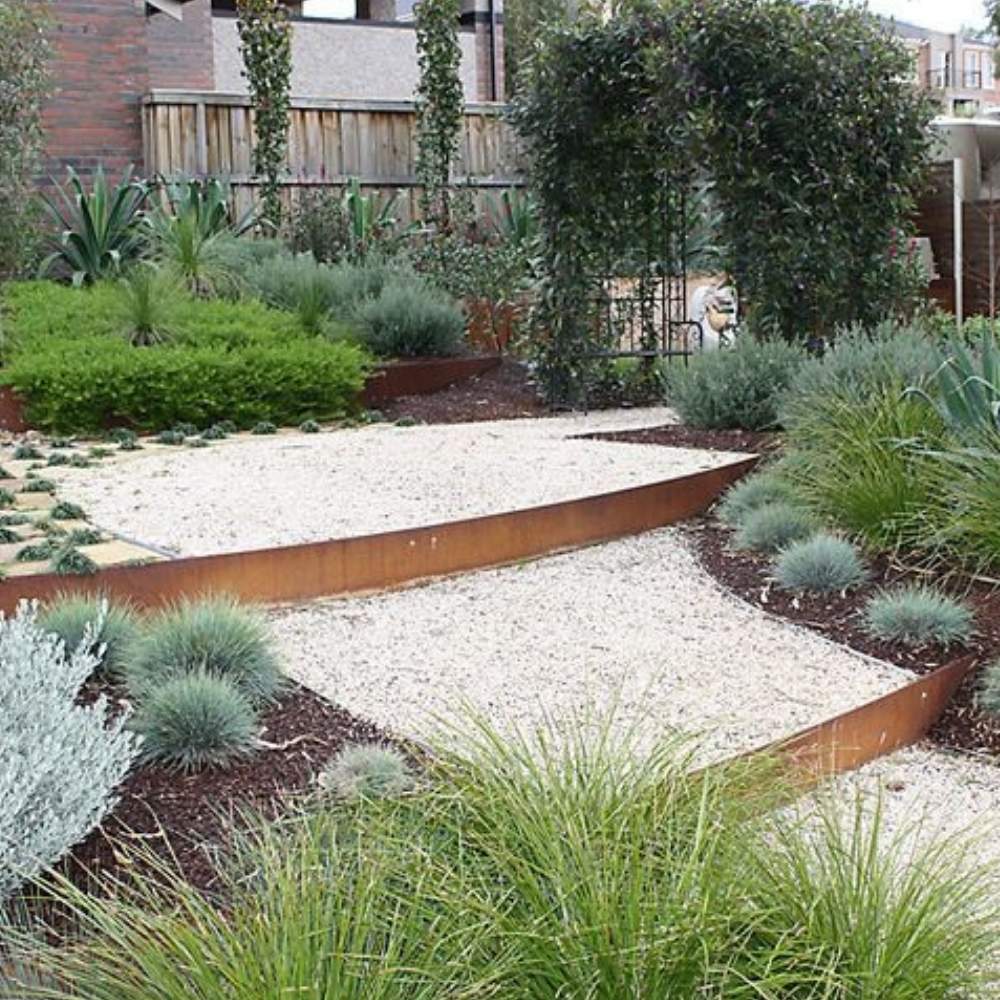
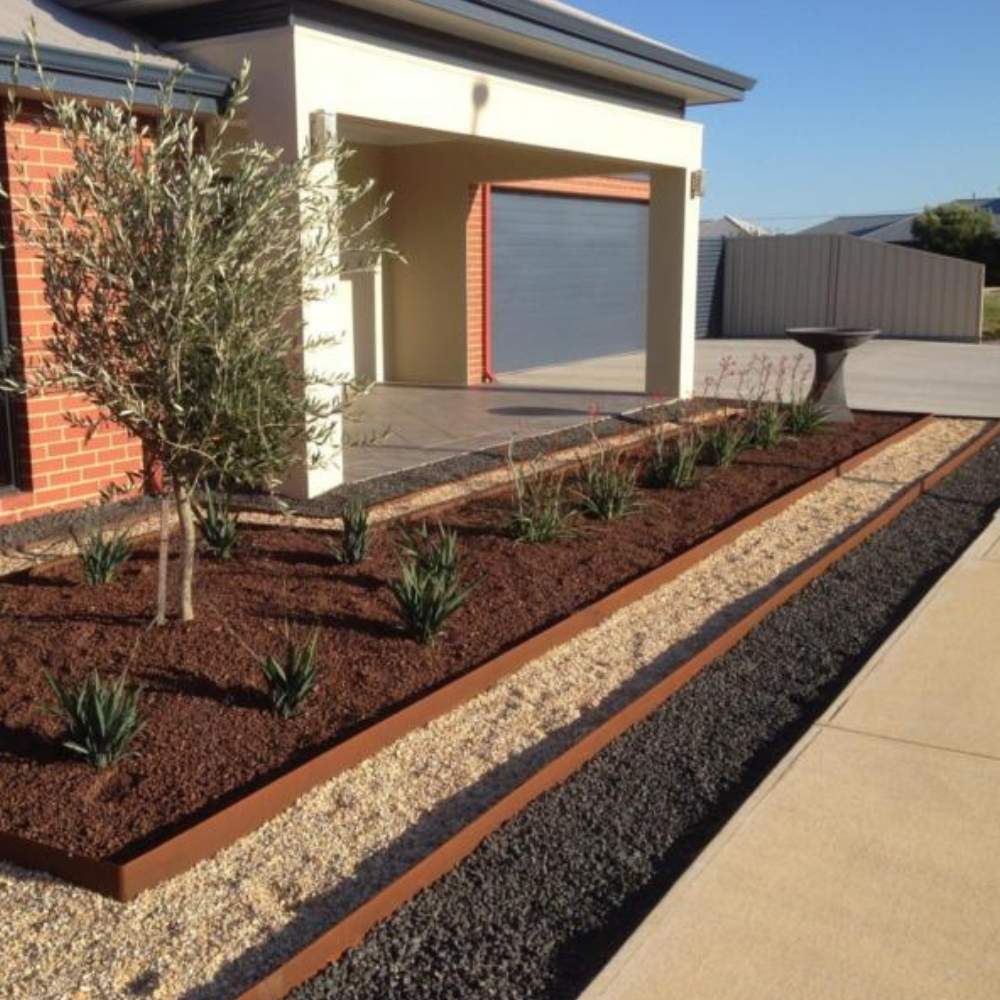
Corten metal edging combines beautifully with other hardscape materials. Pair it with light-coloured gravel or crushed granite for strong contrast. Use it alongside timber decking to add industrial texture to natural materials. Combine it with concrete or stone paving where you want crisp transitions between different surfaces.
Cost Considerations and Budget Planning
Let’s talk about money, because cost is always a factor in garden projects, and weathering steel edging represents a meaningful investment compared to some alternatives.
Initial Purchase Costs
Corten garden edging typically costs between fifty and seventy dollars per linear metre for residential-grade material. Prices vary based on height, thickness, and whether you’re buying pre-rusted or mill finish steel.
Compared to plastic edging at five to ten dollars per metre, that seems expensive. However, you’re not comparing like with like. Plastic edging is temporary and performs poorly. A more realistic comparison is with quality timber sleepers, which cost thirty to fifty dollars per metre, plus installation labour, and need replacement every seven to ten years.
Installation Costs
If you’re doing the installation yourself, your only costs are your time and the minimal tools required. For professional installation, expect to pay between twenty and forty dollars per linear metre for labour, depending on your location and site conditions.
Complex curves, particularly hard soil, or sites with access difficulties will increase installation costs. Simple, straight runs in workable soil are quick and inexpensive to install professionally.
Lifetime Value Analysis
Here’s where corten metal edging justifies its higher upfront cost. With a realistic lifespan of fifty-plus years and zero maintenance requirements, the total lifetime cost is actually lower than cheaper alternatives that need regular replacement.
If you plan to stay in your home long-term, or if you’re a landscaper working on commercial or high-end residential projects where longevity and appearance matter, weathering steel edging delivers exceptional value.
Common Questions and Concerns About Weathering Steel
Let’s address some of the questions and concerns that frequently come up when people are considering corten garden edging for the first time.
Will the Rust Stain My Paving or Concrete?
During the initial rusting phase, there’s potential for temporary staining on adjacent surfaces, particularly light-coloured concrete or pavers. The rust runoff contains iron oxide particles that can discolour porous surfaces.
This staining usually weathers away naturally over time. You can also clean it with oxalic acid-based cleaners designed for rust removal. Better still, plan installation timing for a period when you’ll have several weeks of weather to wash away initial runoff before important events or photography.
How Long Does the Rusting Process Take?
The timeline for full patina development varies significantly based on climate and weather exposure. In humid, rainy climates with regular wet-dry cycles, you might see a well-developed rust colour within six to eight weeks. In dry climates with less moisture exposure, the process might take six months or longer.
Exposure matters too. Edging that receives regular moisture and air circulation rusts faster than protected areas that stay consistently dry.
Can I Paint or Seal Corten Steel?
You can, but you shouldn’t. The entire benefit of weathering steel comes from its ability to form and maintain its protective oxide layer. Painting or sealing prevents this process and actually reduces the material’s corrosion resistance.
If you want a different appearance than the rust patina, you’re better off choosing a different edging material entirely rather than fighting against what makes corten steel special.
What Happens in Coastal Environments?
This is a legitimate concern. In harsh coastal environments with salt spray exposure, even weathering steel faces accelerated corrosion compared to inland locations. The protective patina still forms, but it may not be as effective at preventing deeper corrosion in areas with constant salt exposure.
If you’re within a kilometre or two of the ocean, especially on the windward side where salt spray is prevalent, discuss your specific situation with suppliers. In some coastal situations, stainless steel edging might be a better long-term choice despite higher cost.
Is Corten Steel Safe Around Children and Pets?
Once installed, corten metal edging poses no special safety concerns. The edges can be sharp when new, but with reasonable care during installation, this isn’t a major issue. The rust surface isn’t toxic or harmful to touch.
As with any metal edging, there’s potential for cuts if someone runs into it or falls on it, but this risk is no different than other rigid edging materials. Common sense garden safety applies.
Environmental Considerations and Sustainability
For environmentally conscious gardeners, it’s worth considering the sustainability credentials of corten garden edging.
Longevity Equals Sustainability
The most sustainable choice is often the product that lasts longest. By selecting edging that will serve your garden for fifty years or more, you’re avoiding the repeated manufacture, transport, and disposal associated with short-lived alternatives.
Every plastic edging product you don’t buy and throw away after five years represents avoided waste and avoided carbon emissions from manufacturing and transport.
Recyclability
Steel is one of the most recycled materials in the world. If you ever do need to remove weathering steel edging, it can be fully recycled. The rust layer doesn’t affect the recyclability, it’s simply cleaned off during the recycling process.
Manufacturing Impact
Steel production does have environmental impacts, there’s no avoiding that reality. However, modern steel manufacturing has become significantly more efficient, and much steel now includes substantial recycled content.
When you’re comparing materials, factor in the full lifecycle rather than just the initial manufacturing impact. A product that lasts fifty years has much lower environmental cost per year of service than one that needs replacing every five years.
Making Your Decision: Is Corten Metal Edging Right for Your Garden?
After exploring all these angles, how do you decide whether weathering steel edging is the right choice for your specific situation?
Corten garden edging makes exceptional sense if you value contemporary aesthetics, want minimal maintenance, need effective grass barrier function, and can absorb the higher upfront cost in exchange for longevity. It’s particularly appropriate for modern or industrial-style gardens, native plantings, and any design where the rust colour complements the overall palette.
It’s less suitable if you’re working with a strict budget where upfront costs matter more than lifetime value, if you’re in a severe coastal environment without willingness to accept potentially reduced longevity, or if you simply don’t like the rust aesthetic.
For most homeowners planning garden improvements they want to last decades, and for professional landscapers working on quality projects, corten metal edging represents a smart investment. The combination of functionality, aesthetics, and durability is hard to beat.
Consider starting with a single garden bed or pathway section to experience the material firsthand. Once you’ve worked with it and seen how it performs and ages in your specific conditions, you’ll have confidence in whether to use it throughout your landscape.
Final Thoughts on Weathering Steel Garden Borders
Landscape design involves countless decisions, from plant selection to hardscape materials. Among those decisions, your choice of edging might seem minor, but it profoundly affects how your garden looks and how much maintenance it demands.
Corten steel edging has moved from specialty commercial application to mainstream residential use for good reasons. It delivers the professional appearance that serious gardeners want, provides the functional barriers that make maintenance easier, and does so with minimal environmental impact and essentially zero ongoing care requirements.
The rust patina that initially concerns some people becomes the feature they love most. It’s warm, natural-looking despite being industrial material, and complements virtually every plant and hardscape combination you might choose. As your garden matures and evolves over seasons and years, that weathering steel border remains constant, quietly defining spaces and controlling growth exactly as intended.
Whether you’re redesigning your entire landscape or simply looking to upgrade tired, failing edging, taking a serious look at COR-TEN steel options is worth your time. The combination of aesthetic appeal, practical performance, and genuine longevity makes it one of the smartest choices you can make in permanent garden infrastructure.
Your garden deserves borders that match the care you put into everything else. Weathering steel edging might just be the upgrade that ties your entire landscape together while making your gardening life substantially easier for decades to come.